So you want to start a farm animal sanctuary?
Experts share what it takes to care for rescued farm animals
Once every few months, my husband and I have the same conversation.
“When we retire, we should move to Vermont and rescue a bunch of farm animals,” I say, already imagining our life cuddling sheep, goats, chickens and cows on an idyllic farm with pastures of wildflowers.
“I’m allergic to hay and you like to sleep in,” he reminds me. “Are you going to wake up at 5 a.m. for barn chores?”
His points are frustratingly valid. Still, I continue to fantasize about our quaint future life.
I imagine many other animal lovers also dream of living in the countryside and opening a sanctuary for rescued farm animals. But what does it actually take to live out this dream?
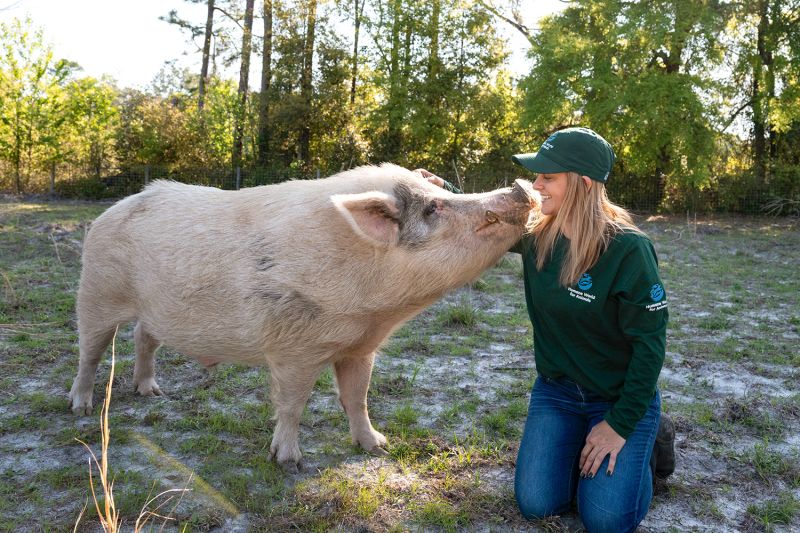
To answer that question, I headed to northern Florida to visit Karla Dumas, Humane World for Animals’ vice president of farm animal protection and founder of Yesahcan Sanctuary, where almost 100 rescued farm animals live within her sprawling backyard.
Life on the farm
I meet Dumas just as the sun is peaking out of the sky. I’ve already chugged a large coffee but I’m still groggy. From the front, her property looks like a standard ranch house, minus the large gate she opens for me.
As Dumas leads me into the backyard, I’m greeted by a completely different scene.
On the left, a small pond is encircled in thick vegetation, from squat palms to tall trees draped with Spanish moss. A pathway on the right is lit with hanging tealights. I hear the murmur of chickens and ducks milling around. I’m instantly captivated by the ethereal charm of the sanctuary.
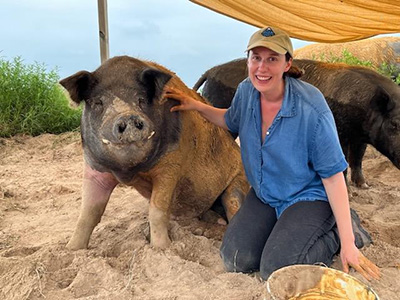
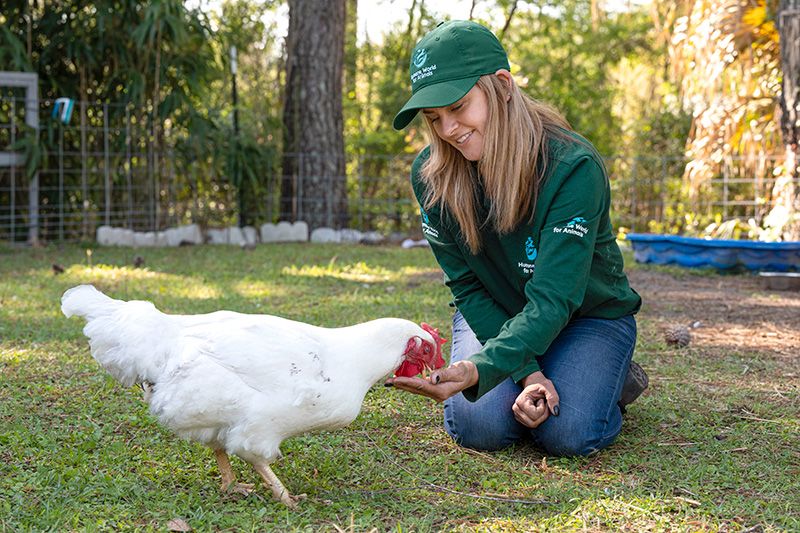
We start our day by letting the chickens out of their sleeping enclosures and feeding the animals who call the sanctuary home, including a herd of goats, massive pigs who were originally bred for factory farms, and mother and son cows. Dumas lugs large bowls of food and supervises meals to make sure everyone is sharing.
Walking through the sections of the sanctuary, I’m struck by the diverse habitats in which the animals reside: goats wander across a large, grassy field; potbellied and feral pigs root around a sandy, desert-like paddock with clusters of yellow, spiky grass; chickens explore thick vegetation that mimics the jungles of their ancestors; and cows roam through a mixture of grassland and forest.
After breakfast, our afternoon turns hectic—a baby feral pig Dumas just took in refuses to eat and starts experiencing severe diarrhea. We take her to the closest veterinary clinic, over an hour away, for antibiotics.
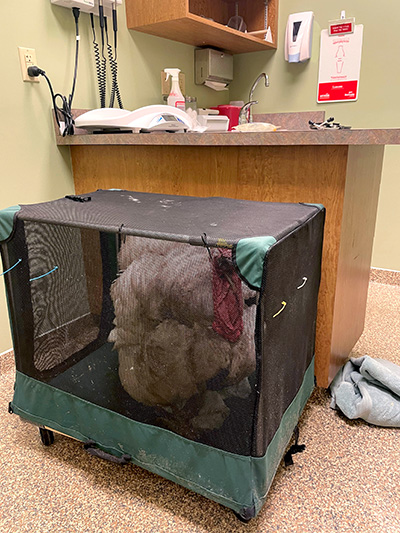
On our way back, another situation pops up: Dumas’ mother, who helps care for the animals, calls to tell her that Red the hen may be injured.
When we get back to the sanctuary, Dumas quickly runs to check on Red. The usually affable chicken is subdued but seems OK. Dumas watches over Red with a worried expression but she must compartmentalize her concern. All the animals now need dinner.
Continual labor of love
People often tell Logan and Tony Vindett, the husband-and-wife team who run Kindred Spirits Sanctuary in Citra, Florida, they’re living the dream. It’s rewarding work, they say, but caring for about 170 animals—including cows, pigs, sheep, turkeys and more—comes with its stressors.
For Logan, the most surprising part of running a farm animal sanctuary is the amount of office work involved—from filing tax documents to responding to emails and handling finances.
“There’s very little time for us to just like sit out with a handful of chickens or handful of goats and just enjoy that with them,” she says.
Because of the high cost of caring for rescued farm animals, some sanctuary owners take on other jobs in addition to running a sanctuary. Between full-time jobs, administrative tasks and animal care, “even when you have free time, you’re generally exhausted,” Tony says.
It’s an exhaustion Dumas knows well. When she was recently sick, she still had to care for the animals every day.
You’ve made a commitment to those animals, Dumas explains, and you can’t just tell them ‘Sorry, I’m sick. You won’t be getting fed today.’”
Care challenges for farm animals
Along with the physical labor, caring for rescued farm animals can be emotionally draining.
In the animal agriculture industry, animals aren’t bred for health or longevity. Sanctuary workers often see the animals they love struggle to perform basic tasks. Chickens and turkeys bred for their meat often can barely stand due to their unnatural weights.
Pigs are also selectively bred to grow rapidly, which can cause them to develop musculoskeletal issues later in life and makes them prone to lymphoma, says Dr. Janis Raines, managing director of veterinary medicine at Humane World’s Black Beauty Ranch in Texas. With careful monitoring and prescriptive diets, Raines and her team are able to keep the sanctuary’s pigs happy and mobile for as long as their bodies allow.
“Great days are watching the pigs run, forage and wallow throughout their pastures and forests,” she says.
In the animal agriculture industry, animals aren’t bred for health or longevity. Sanctuary workers often see the animals they love struggle to perform basic tasks.
Ambassadors for change
Once an animal is born into animal agriculture, it usually takes extraordinary circumstances to get them out.
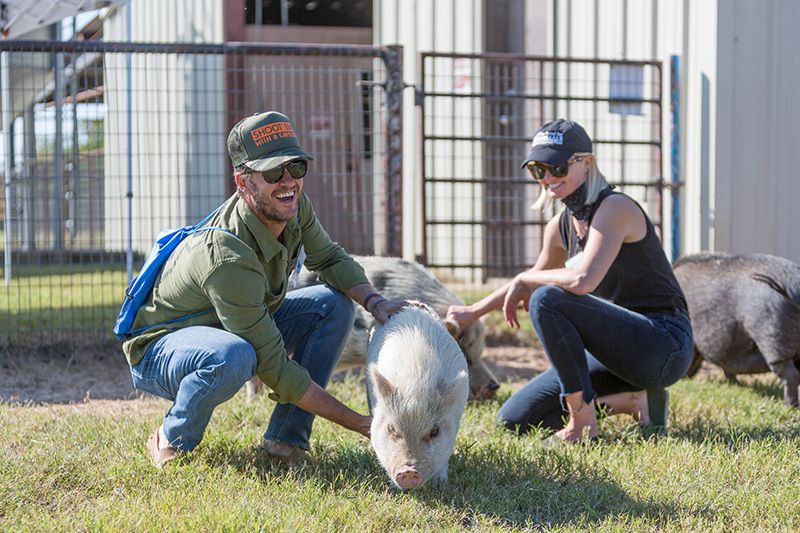
Some sanctuary residents escape farms, slaughterhouses or transport vehicles and are brought to sanctuaries after animal care and control agencies capture them. Many animals, especially pigs, come from the pet trade. Occasionally, farmers relinquish animals who are too sick or injured to be used for food.
Few sanctuary residents come from criminal cruelty cases. In comparison to the cruelty laws that protect pets, farm animals are afforded only weak (if any) legal protections.
In the U.S. alone, an estimated 10 billion-plus land animals are used for meat, eggs or dairy each year, with the vast majority coming from industrial farming systems. The sheer scale of suffering is daunting.
“Rescuing alone is not going to fix the situation,” Dumas says. It’s hard to contend with, Logan adds. “At night, when you’re really tired and you’ve had a long day and then you’re like, ‘Did it make…this huge impactful difference?’”
That’s why sanctuaries also focus on raising public awareness of the cruelties of factory farming. They use their animals’ stories to encourage people to eat a more plant-based diet, which can spare the lives of countless animals, and to support legislative and corporate changes aimed at improving farm animal welfare.
Rescued animals put a face to the issue, “opening hearts and creating connection to each individual rescued,” Dumas says.
The spirit of kinship
I felt that connection throughout my time at Yesahcan.
On my first day at the sanctuary, I had some time to myself while Dumas was pulled away from a task. I found a sunny spot in the grass and petted some potbellied pigs through the fence. The pigs rolled around in pleasure.
All I could hear were the murmurings of farm animals going about their days. Every one of them escaped a grisly fate.
They’ll never again live in a crammed cage or be transported in overheated trucks for endless hours. They’ll never die a cruel death in a slaughterhouse. Their final moments will be filled with comfort and compassion.
I don’t know if I could ever take on the work Dumas and others do every day, but in that moment, I could see why someone would sign up for the early morning chores, the heartbreak, the grueling work.

Advertisement