
Preventing conflicts with black bears
Spread the word about "bear aware" measures in your community
How black bears can lose their fear of humans
Bears have acute eyesight and hearing. Their sense of smell is seven times greater than a bloodhound's. They have a keen ability to detect pet food, garbage, barbecue grills and bird feeders—and once they locate a food source, they remember where it is.
Bears are normally wary of people, but if a bear is rewarded with easy access to food near human dwellings, he may come back for more. Each time this happens, he can become more tolerant of human presence—and this food-conditioning can lead to problematic behavior.
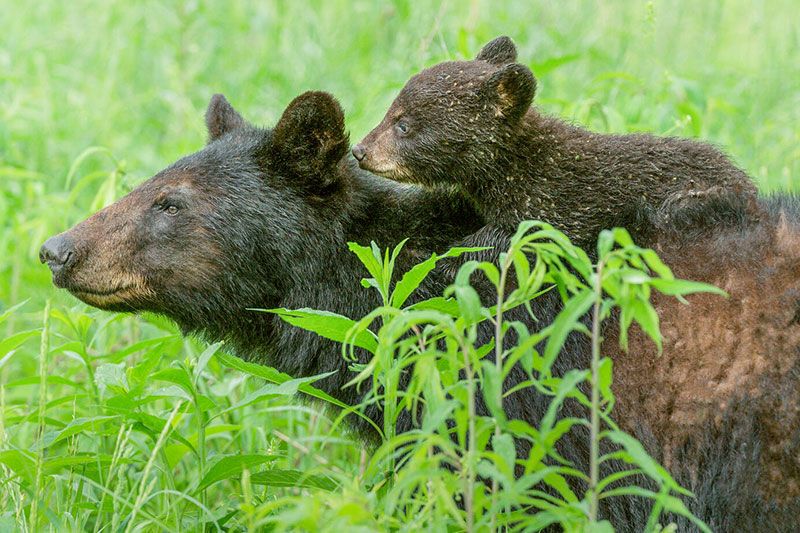
Bears who become tolerant of human activity and seek food rewards near human dwellings are often labeled as "nuisance bears." These are most often subadult males—young bears who have just dispersed from their mothers and are still learning how to obtain food—and mothers with young cubs.
Preventing conflicts with black bears
- Make trash, recycling and compost inaccessible to bears. The biggest food attractant and source of problem bear behavior is caused by not properly securing garbage. Bring trash and cans inside at night, use bear resistant enclosures or better still, use bear resistant trash containers like the wide range of bear-resistant models certified by the Interagency Grizzly Bear Committee.
- Manage your compost. At a minimum, keep compost as odor-free as possible by constantly turning it and using lime and dry grass clippings to hasten decomposition. Never introduce meat, fish, oil, grease or dairy products into compost.
- Rethink your bird feeders. If bears are part of the community that you live in avoid putting out bird feeders from April 1 to November 30. If you do install feeders, install them away from your house and hang feeders from a thick cable out of reach of bears, at least 11 feet off the ground. Wrap metal flashing around tree trunks to prevent bears from climbing up to access the cable. Switch to sunflower hearts (instead of whole seeds) and avoid seed mixes with millet. Be prepared to remove the feeders if they become a source of bear attraction.
- Keep doors and windows locked or locked open with a gap too small for bears.
- Predator-proof your coops. For nighttime protection, keep chickens in bear-resistant coops that are fully enclosed using solid wood construction and heavy-gauge wire (14-gauge or better) fastened with screws and washers over any vents or openings. Any access doors to the coop should have locks. During the day, runs and other areas enclosed by electric fencing can protect chickens from bears. Although bears can get through many barriers, they do pay attention to electric fencing, making it both necessary and effective. A well-trained guard dog or other guard animal can also be helpful in preventing bear intrusions.
- Protect your beehives and gardens. Electric fencing teaches bears to stay away from food sources. Enhance the effect by attaching foil strips to the top wire (at 24 inches of height) and smear peanut butter or honey on the strips. This will encourage the bear to interact with the fence, giving him a quick jolt and teaching him to stay away.
- Clean up after your pets. The golden rule is to never feed pets outdoors, especially in bear country. Doing so trains bears and other wildlife to come to people's homes for food. If pets must be fed outside (for example, if you take care of a community cat colony), leave the food outdoors for an hour at most and clean up the leftover food immediately. Community cats are adaptable and will quickly learn this new feeding schedule.
- Keep your barbecue grill clear and as free of drippings as possible. Move the grill away from your house when you aren't using it and clean it regularly with ammonia or bleach.
- If "bear aware" measures are not in place in your community it is important to spread the word. Tell your community members about securing garbage and other attractants because food conditioned bears can present potential problems for everyone, if easy access to attractants goes unaddressed.
Why hunting doesn't solve conflicts with bears
- When communities start experiencing conflicts with bears, too often state wildlife agencies institute a hunt or raise the quota of an existing hunt. But a host of studies show that hunting does nothing to resolve human-bear conflicts; hunters target bears in the woods, not the ones causing problems near human habitation. Hunting also does not permanently reduce bear populations. Numbers actually rebound with the increased availability of food.
- Lethally removing or relocating a bear and not the attractant will only create an opportunity for another bear to move in, and the cycle of conflict and killing will continue.
Document


Advertisement