Fact sheet: What to do about beavers
Resolve conflicts using humane solutions while allowing these animals to continue providing ecological benefits
Published October 23, 2026
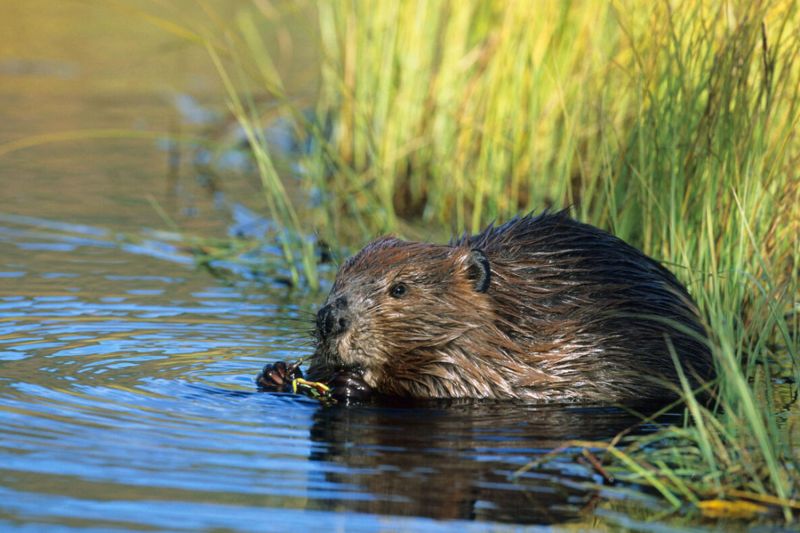
Eliminated across much of its historic range by the fur trade, North American beaver populations have recovered, bringing significant benefits to ecosystems. Often called nature's engineers, beavers build dams to create the deep, stable ponds that give them safe access to their lodges, protect them from predators, and allow them to transport food and building materials with ease. The ponds and wetlands created by beaver dams also benefit many sensitive plant and animal species by providing habitat, improving water quality, controlling floods by slowing water movement, and increasing resilience to drought and climate change.
Although beaver activity can sometimes create challenges like flooding and tree damage, most conflicts can be resolved using humane, effective and long-lasting solutions while allowing these important animals to continue providing valuable ecological benefits.
How to tell if beavers are present
Beaver dams are built from interwoven sticks, branches and mud. They are noticeably different from a random pile of debris caught against a culvert or fallen log. Look for a dome-shaped lodge of sticks and mud at the water 's edge or in the water body itself, tree trunks with distinctive angled chew marks and pointed stumps, and slide trails or canals worn into the bank where beavers move between water and land.
Practices to avoid
Don't trap and kill or relocate beavers
When flooding or tree damage occurs, it may seem that trapping and killing or relocating the beavers would eliminate the problem. This approach provides only temporary relief. Suitable beaver habitat is limited, and once resident beavers are removed, new beavers will likely move into the area and begin rebuilding dams, recreating the same conditions that existed before.
Relocating beavers on your own is rarely successful. Without proper site selection, site preparation and ongoing support, translocated beavers may fail to establish new territories or survive in unfamiliar habitat. Additionally, most U.S. states restrict beaver relocation.
Don't destroy dams
Simply tearing out a beaver dam rarely solves the problem. Because a beaver ?s instinct is to stop the sound of flowing water, removing a dam without changing the conditions that caused the flooding creates an endless cycle of maintenance and removal of damming material. Beavers are highly motivated builders and can repair a damaged dam overnight.
Protecting trees
Beavers gnaw and fell trees for food and construction materials. They consume the inner bark, leaves and twigs of many tree species and use branches and logs to build dams and lodges. Protecting the trees you want to keep is more straightforward, affordable and effective than trying to remove beavers. Several methods have been found to be effective in protecting trees from beavers.
DIY tree trunk guards
Make and place homemade tree guards around the trunk. The guards should be 3-4 feet high and made of galvanized welded wire (2-by-4-inch mesh in 14 gauge is recommended). This fencing material is sold in rolls at any large hardware or home improvement store, with options in bare galvanized metal and coated in black or green PVC (vinyl). Avoid the smaller gauge chicken wire, as it is too flimsy to provide good protection. And in cold climates make sure the trunk guard height is 2 feet above the highest projected snowfall.
To install, cut a section of wire that will provide a 3-to 6-inch gap between the mesh and the trunk to allow for future lateral growth without damaging the tree bark. Cut one edge of the wire, leaving the long nibs to bend and hook the cylinder to itself or fasten with hog rings or zip ties. On sloped ground, slit and flare the high side for a snug fit. Attach extra fence to protect exposed roots and replace if the trunk needs more room to grow after several years. Guards may need to be pinned to the ground around larger trees with landscaping stakes, mulching within the guard to keep weeds at bay.
Paint and sand
The U.S. Department of Agriculture and park managers have shown success in protecting trees by painting their base with a mixture of exterior latex paint and coarse mason?s sand (or standard concrete sand) with grains in the .75mm to 1.75 mm range. The ratio is 20 ounces of sand to 1 gallon of paint. The abrasive quality of the mixture deters beavers from gnawing. The paint color can be matched to the tree so it will blend in a way that meets the aesthetic needs of a site. The paint and sand method does not work with saplings due to their small size, so protect them instead with the tree trunk guard referenced previously.
Fencing out larger areas
Because beavers are poor climbers and rarely burrow under fences, a 3-to 4-foot-high fence can be a highly effective way to block access to larger tree groves. Check the fences frequently to make sure they are intact and that beavers haven?t pushed under them, especially where the fences cross established haul-outs, where beavers like to come from water to land.
Electrification
An electrified wire strung approximately 4 inches off the ground can also prevent beavers from entering an area. This type of fence can be especially effective in a small garden or crop plot when set up to protect plants for a few weeks and taken down afterward. Do not use this method if pets or other animals are likely to come into contact with the fence.
Managing dam-building and flooding
Controlling water levels
The devices and approaches experts use to prevent dam-building or manage water levels take advantage of beavers?natural behavior and preferences.
The design and installation of deterrent and flow devices is complex, and technical assistance from experienced professionals is recommended when using them (see Need help? section). Experience in reading sites and predicting how beavers will respond to attempts to prevent or circumvent dam building behavior can be critical to implementing a lasting solution. It is also necessary to be aware of local, state and federal regulations when planning to install these devices.
These tools, called flow devices, work by controlling water levels and/or blocking access without removing the dam or the beavers. Several proven designs are available including the Beaver Deceivers™, Round Fence™, Castor Master™ and the Clemson Leveler. These devices may be used in combination and selected based on a site?s specific conditions. The overall savings these devices represent compared to the cost of repeated beaver removal or dam destruction make them highly cost effective as well as humane.
Protecting culverts
Culvert diameter affects how likely beavers are to dam it, and research has found that beavers tend to avoid oversized culverts that allow greater water flow. Older, narrower culverts are more prone to plugging, and there are still many of these in place, but designing new culverts with adequate diameter can reduce the likelihood of beaver damming from the beginning. For culvert sites where damming activity is taking place, the Beaver Deceiver™ can be effective either in conjunction with Round Fence™ and a pipe system at its front, or as a stand-alone device depending on conditions. This strategy involves creating a fence barrier in front of the culvert (usually shaped like a trapezoid but adaptable to different configurations as well) that takes the beavers so far away from running water at the culvert head that their instinctive motivation to dam is defeated.
Need help?
Flow device installation works best with input from someone experienced in reading a site's specific conditions. The Beaver Institute maintains a network of professionals in the United States and Canada who can help design and install the right solution, and state wildlife agencies can advise on any permits required before work begins.
Document

Advertisement