Q&A: Dr. Gail Hansen on the dangers of pet vaccine hesitancy
A public health veterinarian describes how growing mistrust of pet vaccines affects animals and people
Published October 29, 2026
In the wake of COVID-19 and the height of a national debate over vaccinations, researchers with Boston University School of Public Health set out to answer an important question: Was the growing mistrust and politicization of human vaccines affecting how people viewed pet vaccines?
Their study, published in 2023, revealed that 53% of dog owners surveyed had reservations about vaccinating their pets.
The reasons ranged from fears over the safety of vaccines to doubts about their effectiveness or medical value. Nearly 40% of owners said they were worried that vaccination could cause their dogs to develop autism.
“There’s no scientific evidence supporting that,” says Dr. Gail Hansen, a public health veterinarian who consults on infectious diseases, animal welfare and One Health issues.
Hansen, who serves as the District of Columbia representative for Humane Veterinary Medical Alliance, says that growing vaccine skepticism among pet owners is concerning from both a public health and animal welfare perspective. It’s also an issue that directly affects animal shelters, rescues and veterinary clinics, which could face more frequent disease outbreaks, more animals kept in quarantine, and increased rabies risks for staff and volunteers.
If there’s any good news in all of this, it’s that vaccine hesitancy is largely driven by people’s love for their pets and wanting the best for them, she says. “And I think we as a veterinary profession, and animal care folks, need to help people understand that giving vaccines is giving the best care you can to your pets.”
In this edited interview, Hansen describes how the animal welfare field can better promote the value of pet vaccinations, why today’s vaccines are safer than ever and her hopes for future advances in vaccine technology.
“I think we as a veterinary profession, and animal care folks, need to help people understand that giving vaccines is giving the best care you can to your pets.”
—Dr. Gail Hansen
How have you seen pet vaccine hesitancy evolve in recent years?

Vaccine hesitancy predated the pandemic, but it has escalated since COVID. For a lot of reasons during COVID, governments and health officials and scientists lost the trust of many people as guidelines changed based on new information.
Trust takes years and years to build, and you lose it in a second. And that bleeds over into our animals.
We’ve been seeing that pet vaccine hesitancy has really been getting worse. And it’s leaving both animals and people at higher risk for disease. I think a lot of that’s related to online misinformation.
What are some of the challenges of combating misinformation?
There are a lot of stories that get passed around as if they’re absolute. One story all of a sudden becomes the one that overrides the science.
And so, can you have an animal who doesn’t do well with vaccines? Yes. Can you have people who don’t do well with vaccines? Yes. But we can manage and treat those extremely rare events.
People are surrounded by social media and influencers. An influencer may just have been given misinformation, or they may be paid by somebody who’s making a ton of money selling something that’s not been tested. And they don’t have to disclose that.
We need to remind people that veterinarians have to follow the science. Veterinarians have to do continuing education every year and stay up to date.
How can the animal welfare field better explain the value of pet vaccines?
We know vaccinated pets live longer and they live healthier. So we have to try to explain that to people and explain that the real concern is for pets being under-vaccinated.
I also tell people that if they opt not to give vaccines to their animals, it can limit their travel, whether they’re able to board their animals, whether they can use pet day care and sitting services, groomers or dog parks. So if you decide that you’re not going to vaccinate your pet, you’re not only potentially harming your pet, but you’re also limiting what you can do with your pet.
Also, vaccines prevent disease from being passed from pet to pet, from pets to other animals in the shelter, from pets to people, and from pets to wildlife. The cost of not vaccinating your pets is a cost to all the other pets, to the wildlife and to other people.
Where can people find the latest, evidence-based recommendations on pet vaccines?
Veterinary schools often publish their vaccine protocol recommendations for core vaccines (which are recommended for all pets) and non-core vaccines (which are lifestyle- or location-dependent) on their websites. Groups such as the American Animal Hospital Association and the Feline Veterinary Medical Association also publish vaccine guidelines.
How do you address questions like “Do my indoor-only cats really need vaccines”?
I’ve had a couple of those conversations. There are some cats who—you open up the door and they’re out that door. If you live in an apartment in New York City and your cat has to get down 18 flights of stairs or down the elevator to get outside, you’re not likely to have a problem. And if your animal has been vaccinated over and over again, you’re not likely to have a problem.
But most people’s pets are not as low risk as they think they are. The big concern, and I saw it a couple of times with clients, is a fire in your house or your building, a tree falling on your roof, a flood or tornado, an emergency evacuation. Even if your pet’s risk for exposure to disease is low, having them vaccinated is part of protecting them from disasters. You will likely need those vaccination records if you need to board them or take them to an emergency shelter.
Another question that comes up is elderly pets. Many people think that because their pet is older and they’ve had vaccines over their lifetime, their immunity has developed and they don’t need vaccination. But just like for humans, as you get older, your immunity wanes. So as your pet gets older, their immunity may not be what it was when they were a 10-year-old. If you have questions or have a pet with rare medical conditions where vaccines are not indicated, consult with your veterinarian on what would be best.
Another issue that comes up in vaccine discussions is titer testing as an alternative. Can you talk about that?
When it comes to rabies, part of the problem with titer testing is that many states don’t accept it as proof of vaccination, so you’re running the same risk of your pet being quarantined, not being able to be boarded somewhere, etc.
Rabies titer testing is also not as straightforward as it is for some other vaccines. The titers can likely tell you if the animal has been vaccinated, but there’s no known titer value that would show that the animal is protected against rabies. I hope that in five or 10 years this will change, but we’re not there yet.
Also, in the U.S., there are really only three or four labs that I would feel comfortable having do the titer test. And it’s much more expensive than just giving the vaccine. Giving a vaccine is almost never going to do harm, but not giving a vaccine could be catastrophic.
"We know vaccinated pets live longer and they live healthier. So we have to try to explain that to people and explain that the real concern is for pets being under-vaccinated."
Can you talk about the issue of injection-site sarcomas in cats?
Cats are susceptible to sarcomas, but it’s not just vaccines. Because microchipping, antibiotic and long-acting steroid shots, subcutaneous fluids, nonabsorbable suture material can cause sarcomas. Injection-site sarcomas have also been reported in dogs, though they’re even more rare than they are in cats.
We don’t really know why these sarcomas develop, and it was something that we didn’t recognize for a long time. But veterinarians and scientists started looking at it and asking, “Are there ways to fix that?” And the answer is yes, by vaccinating different sites. They’ve also changed the vaccines, so there’s less what I call “junk” in the vaccine, fewer substances in the vaccine that are likely to cause sarcomas.
So the risks are decreasing, and they were pretty minimal to begin with. If you look at the sarcoma rate, it was about one in every 10,000 animals. Could your animal be that one in 10,000? Of course. Somebody’s animal is going to be that one in 10,000. But now we’re aware of it, we’re better at catching these early.
What’s not a good idea is to say, “Well, I’m afraid of sarcoma, so I’m not going to get my pet vaccinated.” That would be the worst thing.
What do you most fear will happen if more people stop vaccinating their pets?
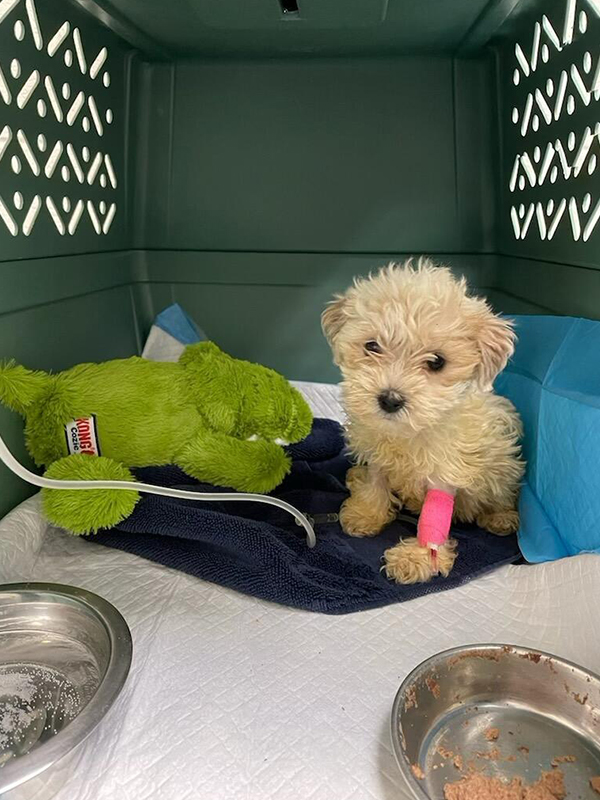
I’m afraid we’re going to see more pets dying of preventable diseases, not only rabies but also distemper and parvovirus and leptospirosis. Because vaccines have been so successful, people forget how horrible these diseases are. But the diseases are just waiting for an opportune moment to pop back up.
Rabies still kills nearly 60,000 people in the world every year. It’s only about one to three human deaths a year in the U.S. because we vaccinate our animals. But hundreds of people and thousands and thousands of dogs and cats once died each year from rabies in this country.
I tell people that rabies is 100% fatal. If you get it, if your dog gets it, if your cat gets it, if your ferret gets it, if your horse gets it—they will die. And they will die a horrible, painful death. And I don’t know anybody who wants that.
Can you explain why even a suspicion of rabies can be deadly for pets?
Unfortunately, the only way to test for rabies is to euthanize the animal and submit their head for testing. In 2023, more than 42,000 dogs and cats in the U.S. were killed because of a suspicion of rabies; only a tiny percentage of those animals actually tested positive.
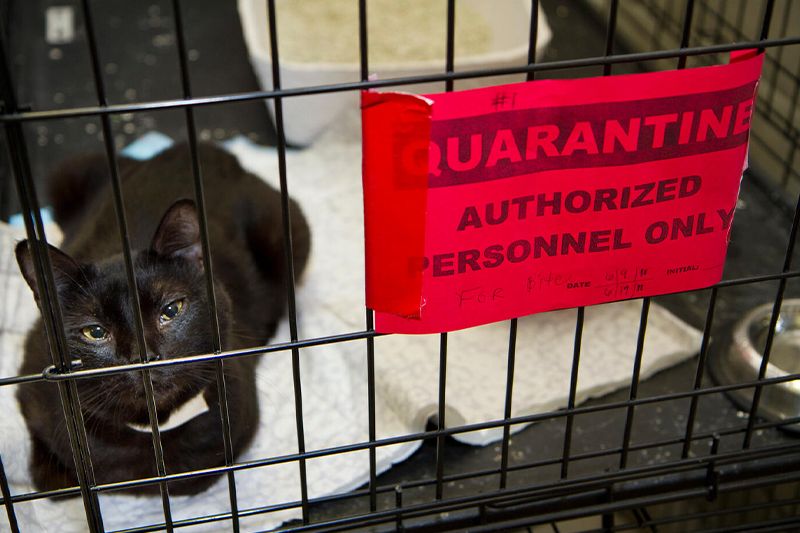
And then there are all those pets who are forced to live in quarantine because they either bit someone or had contact with a wild animal. If they’re not vaccinated, in most states it’s usually anywhere from 45 days to six months of quarantine at the owner’s expense. Some places won’t let you visit your pet. So you have up to six months where your pet is sitting in a shelter or a vet clinic and you can’t visit them. All for something that’s so easily preventable.
Because vaccines have been so successful, people forget how horrible these diseases are. But the diseases are just waiting for an opportune moment to pop back up.
What other diseases are you most worried about?
Canine distemper is one. It was once very rampant, and we still see it occasionally. It has a high mortality rate, especially for puppies.
Even if a dog survives distemper, it permanently damages their nervous system, and most will suffer lifelong health problems that can pop up years down the road. They can end up with partial paralysis. They can get recurring seizures. When I was in vet school, we would see dogs who survived distemper go into cognitive decline a lot more often than the general dog population.
We don’t see those long-term consequences with all the canine and feline diseases, but we see it with enough of them. And with distemper, it’s all completely avoidable with vaccines.
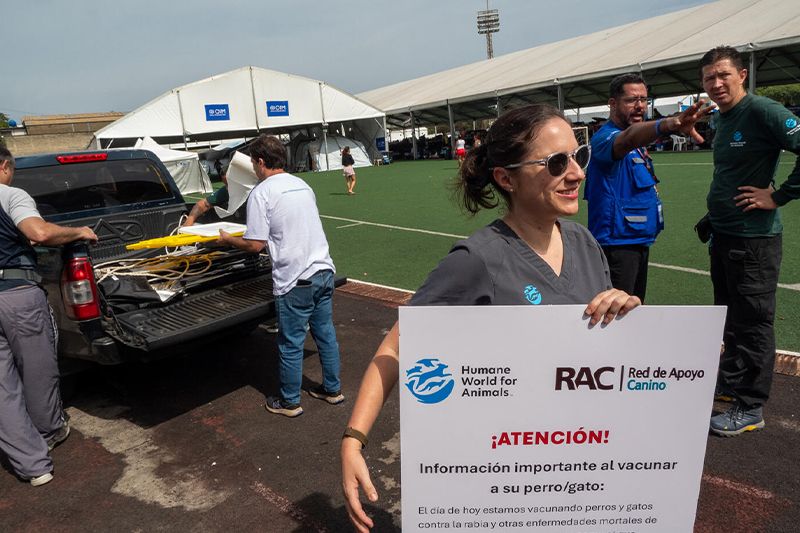
How have vaccines improved in recent decades?
Today, vaccine manufacturers are going toward fewer and fewer adjuvants (additives) and basically purifying the vaccine as much as they can and it still does the job it needs to do.
I’m becoming more and more interested in the mRNA vaccines because you can make them quicker, you can make them cheaper, and that technology means they don’t have to use the adjuvants, so you have a lot fewer side effects. They’ve been well-trialed, so we know the technology works very well.
Researchers also continue to look at vaccine intervals, working to determine the optimal interval for administering various vaccines so they’re not given more often than needed.
How do you hope to see vaccine technology evolve in the future?
One thing that manufacturers are looking at is whether we can produce vaccines in combination. Can we give a rabies and distemper/parvo vaccination in one shot? People don’t want to see their animal injected with a needle more often than needed.
Alternative ways to give vaccines are being explored. There are some vaccines that are now given intranasally, which are not always the easiest to give, but because we have an oral rabies vaccine for raccoons, can we come up with oral rabies vaccines for pets?
Also, researchers are looking at vaccines to prevent some cancers in our animals. The first vaccine to prevent a cancer was in chickens, and that was more than 50 years ago. We now have vaccines that prevent some cancers in people.
Can we get more of those vaccines for our pets? Could we prevent mammary tumors by vaccine? Could we prevent osteosarcomas? Could we prevent lymphomas? That would be amazing, right?

Advertisement