Thinking outside the kennel
To help barrier-reactive dogs find homes, the New Hampshire SPCA turns to outdoor speed dating
Published March 3, 2026
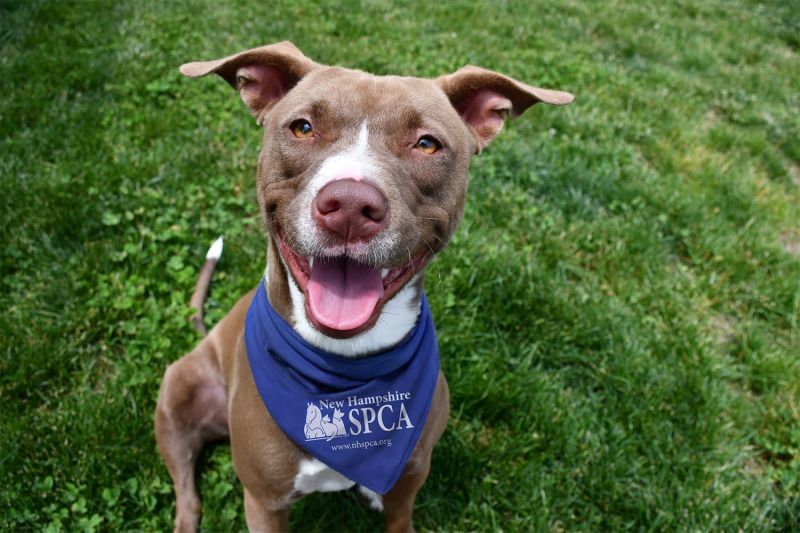
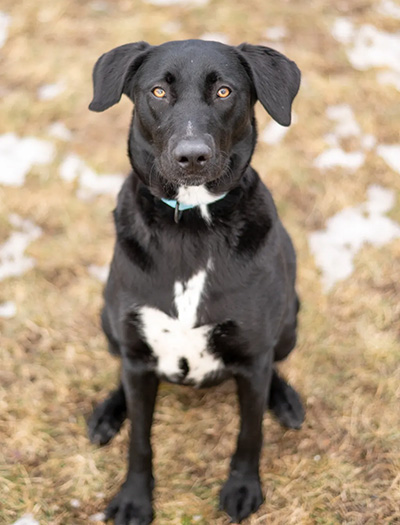
Moxy, a black-and-white Lab mix, arrived at the New Hampshire SPCA at the start of 2025. With her adorable face and bright personality, the shelter team thought she was sure to find a loving family fast.
But the approximately 4-year-old, high-energy pup struggled with life inside a kennel and would bark at potential adopters, scaring them away. After six weeks, she was still at the shelter and growing increasingly frustrated.
NHSPCA, an open-admission shelter in Stratham, takes in nearly 3,000 animals every year and works hard to keep dogs’ average length of stay under 14 days. Those who exceed that benchmark are affectionately referred to as “sticky dogs.”
Last spring, NHSPCA found itself with five sticky dogs, including Moxy, whose stays averaged about 35 days. The shelter team knew it was time to revisit one of their tools from years past—outdoor doggie speed dating.
Solutions for kennel-reactive dogs
Shelters are inherently stressful for animals, and for some dogs, kennel presentation is the biggest hurdle to adoption, says Savannah Alcerro, NHSPCA vice president of animal and veterinary services.
Shelter staff and volunteers can play an important role in helping visitors understand kennel reactivity, letting them know that certain behaviors that show up inside the shelter often don’t reflect how a dog will act in a home.
But dogs who make poor first impressions still tend to be passed by. For them, NHSPCA has found that a change of venue can make all the difference.
For last year’s doggie speed dating event, Alcerro and her team reduced as many adoption barriers as possible. They increased hours and staffing by using volunteer handlers, and they moved the dogs outdoors, eliminating the stressors of a noisy kennel environment.
The event featured a true speed dating setup—with tables, chairs and dog beds stationed around the perimeter of the building and parking lot. Dogs were strategically placed depending on their behavior. For example, those reactive toward other dogs were assigned spots where their view of other dogs was limited.
Handlers had copies of each dog’s profile with medical and behavioral information ready to share, while the dogs waited for potential adopters to stop by to meet them.
The relaxed, welcoming format of the event gave the community a chance to meet shelter dogs without any pressure. The buzz of activity on the shelter campus also drew in folks in from the neighborhood who were curious about what was happening, Alcerro says, adding that she’d never seen the shelter’s parking lot so full.
Speed dating success
Once outside the shelter’s walls, Moxy relaxed and her charm was on full display. A woman who learned about the event through social media made the trip from the next town over. She saw Moxy sitting with her volunteer handler, fell in love and was soon completing the adoption paperwork.

Two other sticky dogs were also adopted during the event. In total, seven dogs—six of them large dogs—found homes, and the benefits extended beyond the event day.
Yahtzee was a particularly sticky dog whose volunteer handler decided to foster him after getting to know him during the speed dating event. Yahtzee thrived in a home environment, and shelter staff were able to update his online profile with new pictures and testimonials from his foster family. Within a week of his profile update, Yahtzee was adopted into his new home.
For Alcerro, the event’s success highlighted the power of volunteers—not only in helping with adoption events but in advocating for dogs whose true personalities might not shine through in a kennel environment. Training and trusting volunteers “pays off exponentially for staff and animals alike,” she says.
Even visitors who didn’t adopt that day left with a deeper appreciation for the shelter’s work—and that kind of connection leads to lasting support, future adoptions and new volunteers.
“The NHSPCA tries to be as barrier-free as possible and meet the community where they’re at,” Alcerro says. “This event was a great way to do that in a fun, exciting and novel way.”

Advertisement