Fact sheet: How to clip your cat's claws safely
Regular nail trims help keep cats comfortable, reduce scratches and protect furniture
Published September 3, 2026
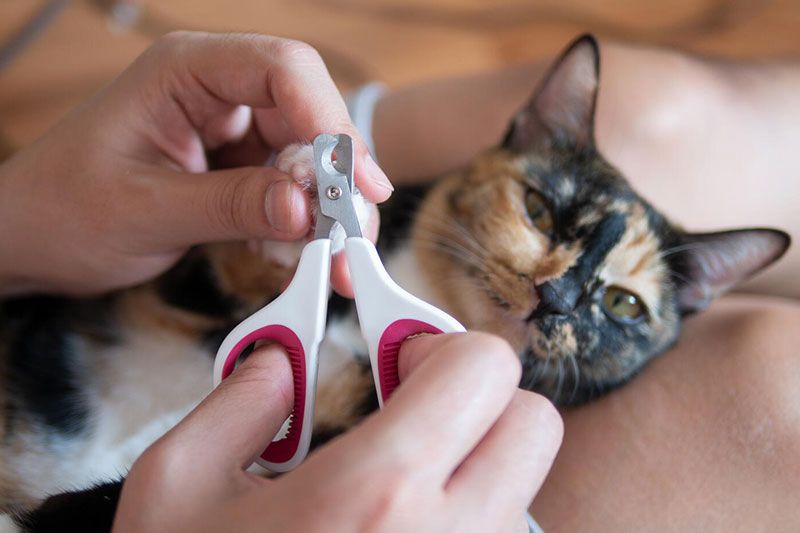
Regular nail trims help keep your cat comfortable, reduce scratches and protect furniture. With patience, the right tools and short practice sessions, many cat owners can trim their cat's nails at home.
How often? Check your cat's nails every 2 to 4 weeks. Indoor cats, older cats, and cats with claws that snag on fabric may need trims more often.
Go slowly. If your cat becomes upset, stop and try again later. It is better to trim one or two nails calmly than to force a full trim.
Choose a quiet time when your cat is relaxed, such as after a meal or nap. Make sure the clipper blade is sharp; dull blades can crush or split the nail.
Tip: Many cats do best when you trim just a few claws at a time. Start with the front paws; check the back paws and dewclaws regularly, especially if they are getting long or snagging.
Only front claws retract. Back claws can wear down through walking while retracted front claws stay sharp, requiring more frequent clipping.
What you need
- Cat nail clippers—small, scissor-style clippers are best, avoid guillotine-style clippers. Clean human nail clippers are also an option.
- Styptic powder, cornstarch, or a dry bar of soap in case a nail bleeds
- Treats (crunchy or lickables) or a favorite food reward
- A towel or blanket, if your cat feels calmer when gently wrapped
- A helper, if available
Step-by-step instruction
- Get your cat comfortable. Let your cat sit on your lap, on a table, or in another secure spot. Use gentle, steady support—never squeeze or pin your cat down.
- Hold one paw. Gently take one paw in your hand. If your cat pulls away, pause, offer praise or a treat, and try again later.
- Extend the claw. Press lightly on the top and bottom of the toe, just behind the nail, until the claw extends.
- Find the quick. Look for the pink area inside the claw. This contains blood vessels and nerves.
- Clip only the sharp tip. Trim the clear, thin curved hook of the claw. Stay well away from the pink quick.
- Most cats have translucent claws, however if your cat has dark claws, making the quick hard to see, trim just the sharp tip.
- Reward your cat. Offer praise, petting, or a treat after each claw or each paw.
Make it easier next time
- Practice touching your cat's paws when you are not trimming their claws.
- Keep sessions short and positive.
- Use treats each time you touch your cat's paws to build a calm routine.
- Ask your veterinarian or groomer to demonstrate if you are unsure.
Be careful around the quick
The quick is the pink part of the claw containing nerves and blood vessels. Cutting it can hurt and may cause bleeding. If your cat has dark claws and you cannot see the quick, trim only a tiny amount at a time.
If you cut too close
Stay calm. Apply gentle pressure to the claw tip, then use styptic powder, cornstarch or rub the claw across a dry bar of soap. Stop the trimming session and watch to make sure the bleeding stops. Call your veterinarian if bleeding does not stop, the claw looks damaged, your cat seems painful or a claw is growing into the paw pad.
Remember: A successful nail trim is one that keeps both you and your cat safe and calm. Trimming one paw—or even one claw—can be progress.
For individualized advice, consult your veterinarian.
Document

Advertisement