Fact sheet: How to help your cat scratch in the right places
Help your cat choose scratching options that work well for both of you
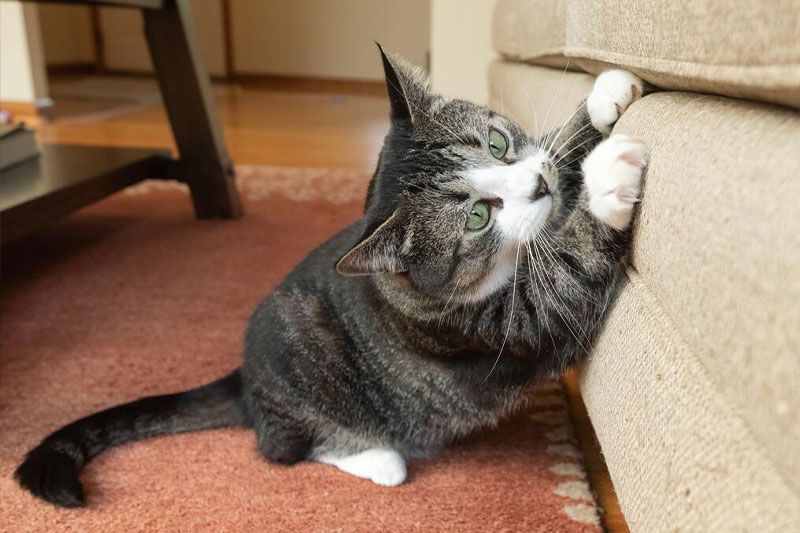
Scratching is a healthy, natural behavior for cats. It helps them stretch, care for their claws, mark familiar places with scent from their paws (scent glands on the pads and between the toes), and release energy or excitement. The goal is not to stop all scratching–it is to help your cat choose scratching options that work well for both of you.
Cats do not scratch furniture to be "bad." They simply choose the surfaces that best meet their needs. With the right scratching surfaces in the right places, most cats can learn to use appropriate scratching options instead.
Start with your cat's preferences
Look at where and how your cat already likes to scratch. Do they stretch up on the side of the couch, scratch chair legs, or dig into rugs and carpet? Their current choices can tell you what kind of scratcher they are most likely to use. If your cat is new to the family, start out on the right paw by providing a variety of options.
- For cats who scratch upright surfaces, choose a tall, sturdy vertical scratching post.
- For cats who scratch rugs or carpet, try a horizontal scratcher or scratching mat.
- Offer appealing textures such as sisal, corrugated cardboard, or rough wood.
- Make sure the scratcher is tall or long enough for a full-body stretch and stable enough that it will not wobble or tip.
Scratching does not sharpen a cat's claws. Scratching rough surfaces serves to remove the old, dull outer sheath of the claw, not sharpen the tip.
Place scratching options where your cat wants to use them
Location matters. Put the scratching post or pad near the places your cat already scratches or spends time. If your cat scratches the couch, place the post beside the couch. If your cat scratches near the front door when you com e home, place a scratcher near that door.
Make the new scratcher inviting
- Play with your cat near the scratcher using a wand toy or other favorite toy.
- Sprinkle or rub catnip on the scratcher for the first few days if your cat enjoys catnip.
- Praise your cat when they use the scratcher.
- Avoid carrying your cat to the post and rubbing their paws on it. Some cats find this stressful and may avoid the scratcher afterward.
Temporarily make furniture less appealing
While your cat is learning to use the new scratching option, protect the places you do not want scratched. Cover furniture with a tight-fitting sheet or use double-sided sticky tape on smaller surfaces. Cats usually prefer surfaces they can dig their claws into, so smooth, slick, or sticky coverings can help redirect them to the better options. Once your cat is consistently using the scratcher, you can gradually rem ove the coverings.
Apply a feline pheromone spray, such as Feliway Classic, to furniture or other surfaces you want to make less appealing. The scent sends a familiar 'already marked' signal to your cat, which can help reduce repeat scratching in that spot.
With the right scratching surfaces for your cat and regular nail trims, you can keep your cat happy and healthy and your furniture intact. For individualized advice and assistance with advanced training techniques, consult your veterinarian or a cat behaviorist.
Document

Advertisement