Modern animal welfare standards have major implications for shelter design
How the Association of Shelter Veterinarians’ guidelines may impact your animal shelter
Sponsored Content
Published February 26, 2026
Recent years have brought fresh insights on how animals experience life in a shelter setting and how stress effects their physical and emotional health. As our knowledge expands, expectations for how shelters house and care for animals continue to evolve.
To help shelters meet these expectations, the Association of Shelter Veterinarians’ Guidelines for Standards of Care in Animal Shelters sets the bar for sheltering best practices. This pivotal resource shapes not only how shelters operate but also how they are designed—all with the goal of safeguarding animals’ physical and emotional well-being.
Why do the ASV guidelines matter?
The ASV guidelines provide a framework for animal shelter decision-makers to use when designing or redesigning new or existing buildings. The guidelines are intended to mitigate disease spread and improve behavioral wellness. They give shelter leaders, local officials and community members a set of common standards to evaluate their facility and prioritize improvements.
While many of the ASV standards focus on daily operations, several have profound implications for the physical facilities themselves. For example, the guidelines influence shelter planning, space design and engineering decisions on both new construction and renovation projects.
Overview of the ASV guidelines
The ASV guidelines go far beyond shelter operations and simply containing animals. They support both the physical needs and behavioral health of animals in the shelter environment.
A few of the key topics outlined in the guidelines include:
- isolation protocols for animals with contagious illnesses
- behavioral care and stress mitigation strategies
- species separation
- meaningful enrichment and socialization
These best practices are rooted in research and intended to reduce the fear, anxiety and stress of shelter animals. They are intended to promote comfort, choice and opportunities for coping. Ultimately, the guidelines aim to both improve the lives of animals in the shelter and reduce their length of stay.
What are the general standards for animal housing?
Would your facility meet ASV best practices? Here are some of the most common standards for shelters today:
- Do you have animals staying for more than two weeks? Under the ASV guidelines, any animal housed for more than 14 days must receive increased space, meaningful enrichment and greater choice within the enclosure. Longer stays require shelter environments that support natural behaviors and reduce stress. Even animals staying for short periods (more than a few days) need daily enrichment.
- Do you house multiple species? Cats, dogs, small mammals and other species should be kept in separate rooms.
- Do you have proper isolation spaces? Isolation housing must not open directly into other animal areas and should have its own handwash station, treatment space and storage. Every shelter must provide a separate isolation area for infectious animals to prevent cross‑contamination. This type of purposeful isolation reduces the spread of illness and protects the most vulnerable animals in your care.
Does your shelter meet the cat housing standards?
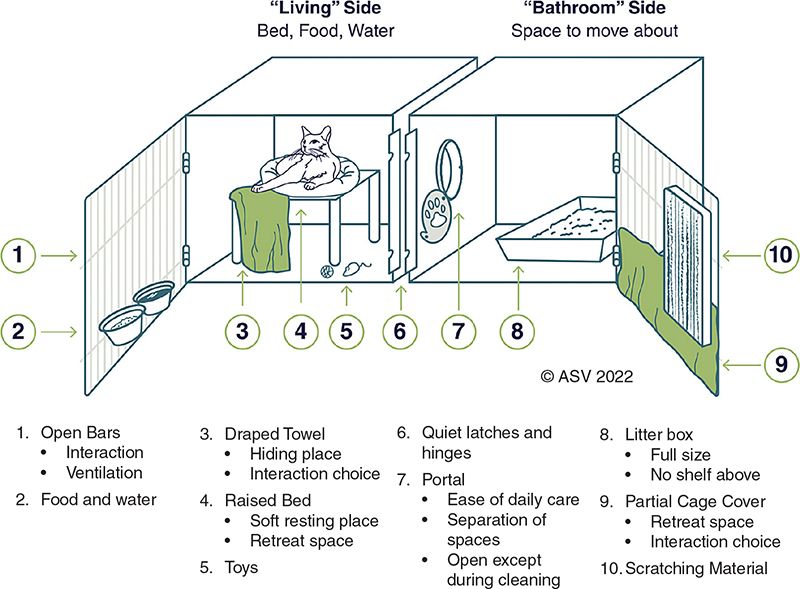
For cats, single enclosures must provide at least 8 square feet of space. Keep in mind that 11 square feet or more is ideal, and multicompartment enclosures are strongly encouraged. Here are a few more important considerations for each enclosure:
- A separate litter area large enough to allow normal posturing
- A hiding space that supports coping and stress reduction
- Elevated housing off the floor
- Space for scratching, climbing and perching
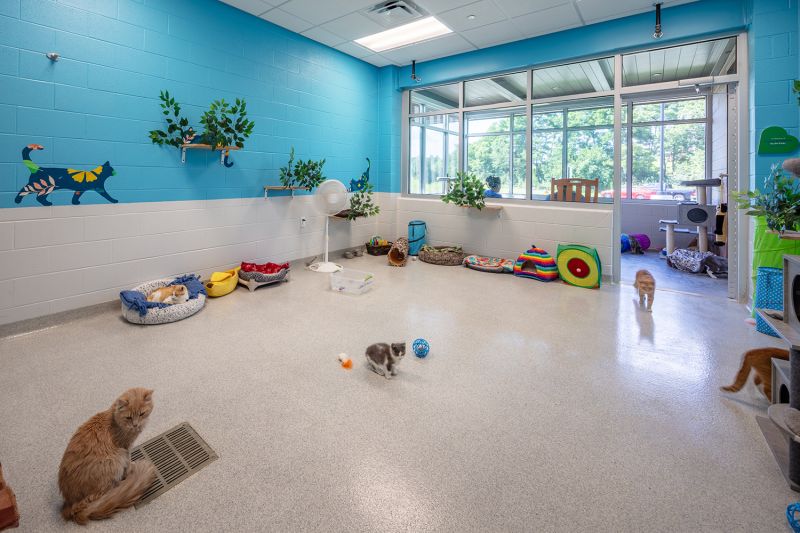
Beyond specific considerations for each enclosure, there are general best practices for cat housing areas. For instance, to reduce visual stress, cats should face away from one another or be at least 4 feet apart. Community rooms should hold no more than six free‑roaming cats and provide at least 18 square feet of space per cat.
Does your shelter meet the dog housing standards?
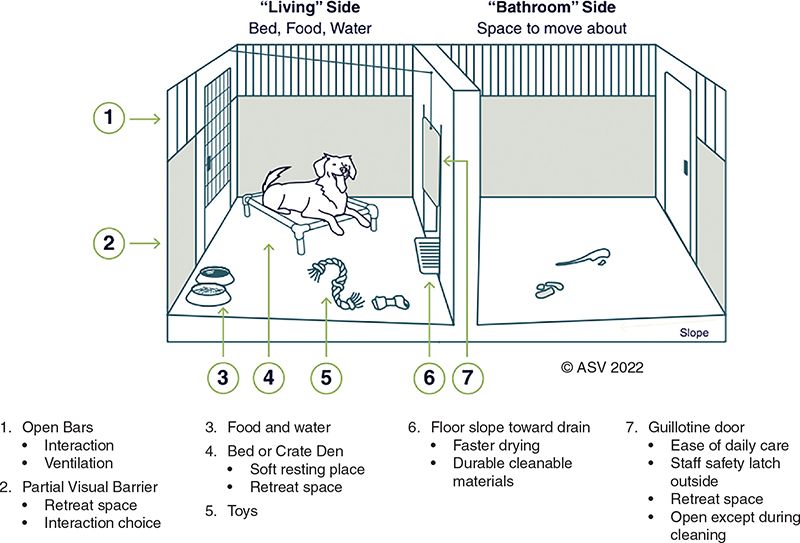
Dog enclosures have their own set of standards. ASV guidelines hold that enclosures must be sized to allow the animal to:
- stand
- lie comfortably
- turn around
- walk several steps
- hold their tail erect
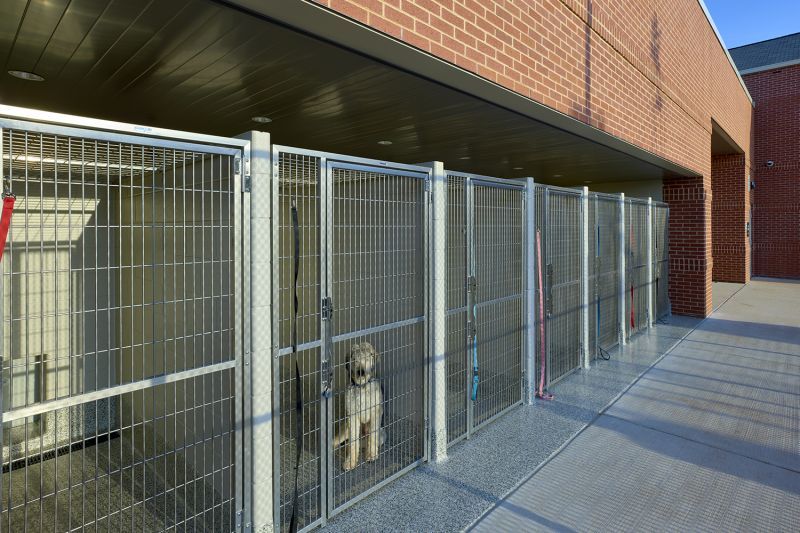
Double‑compartment or indoor/outdoor enclosures are ideal. Similar to the cat housing standards, each space should include an elevated resting area and a hiding area to support behavioral health.
Within cohousing enclosures, it is critical to provide ample space for each dog to maintain distance from others. Keep in mind that no more than two to four dogs should be housed together.
Another important guideline is for the flooring to be sloped. The slope allows for proper drainage while preventing standing water and runoff from spreading into adjacent kennels.
Case study: The New York law
It’s important to stay up-to-date on regulatory changes in your state. Keep in mind that when states are looking to update their shelter regulations, ASV best practices may serve as a guide.
For instance, on December 15, 2025, New York’s Companion Animal Care Standards Act went into effect after a multiyear phase in period. This law requires shelters to update their facilities, if needed, to meet higher standards—many of which reflect the ASV guidelines.
For shelters planning new construction or renovation anywhere in the country, the ASV guidelines can be a helpful tool in the design process. The engineers and interior designers at Design Learned Inc. encourage animal shelter decision-makers overseeing building renovation or new construction projects to begin integrating the ASV guidelines into their facilities.

Advertisement