How to: Elect a pet mayor and increase community support
An upbeat political race in Tacoma raises money for animals and boosts civic morale
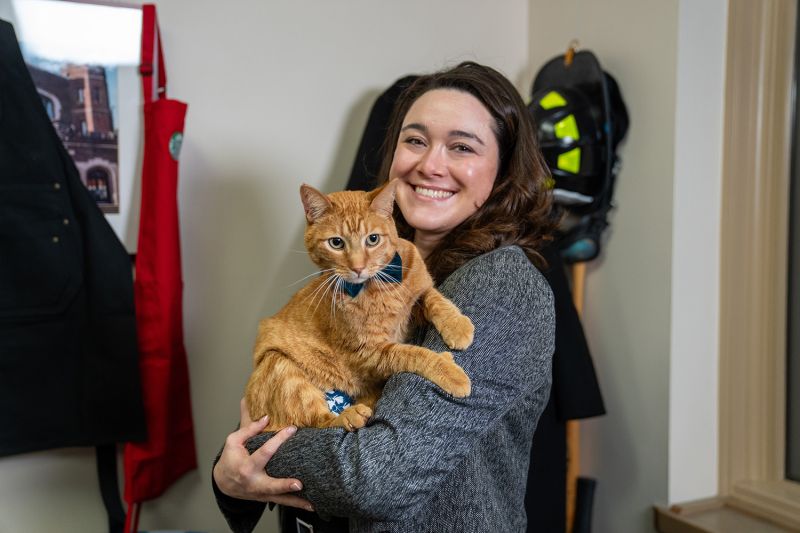
When Nacho entered Tacoma’s City Council chambers in December, he carried the weight of public office on his furry orange shoulders. Luckily, his official duties as the city’s first pet mayor lasted only a day—but his impact will last far longer.
The charismatic cat and his fellow mayoral candidates helped raise over $14,000 for the Humane Society for Tacoma & Pierce County in Washington state while giving residents a fun reason to engage during election season.
“People were craving something lighthearted,” says Megan Tackett, development strategist at the nonprofit shelter, which cares for more than 9,000 animals a year. “A pet mayor race gives almost everyone something to rally around.”
Why Tacoma launched a pet mayor fundraiser
The idea for Tacoma’s pet mayor began with a shared goal: support spay/neuter programs while engaging the community in a playful way. City Council member John Hines, inspired by similar pet mayoral elections on Orcas Island in Washington state, approached the Humane Society with the idea as an upbeat collaboration in a time of political anxiety.
“The people of Tacoma love their animals,” says Hines, who helped the city become the first in the state to ban nontherapeutic declawing of cats. “A pet mayor race just felt like the perfect fit.”
The timing was also perfect for Nacho, a former community cat turned politician and pampered pet, who ran on a platform of perseverance. He was rescued as part of a trap-neuter-return program, but because of a broken tail and spinal injury, he couldn’t be returned to the outdoors. With the support of his adoptive family, he’s thriving six years later…ready to go down in the history books as the city’s first pet mayor.
How the pet mayor election worked
Tackett and her team were just coming off a previously scheduled fundraiser, so they wanted to keep the pet mayor election simple and easy to manage. Through the GoGoPhoto Contest platform they use for other contests and events, they hosted a one-week primary followed by a weeklong general election, culminating on Election Day in November.
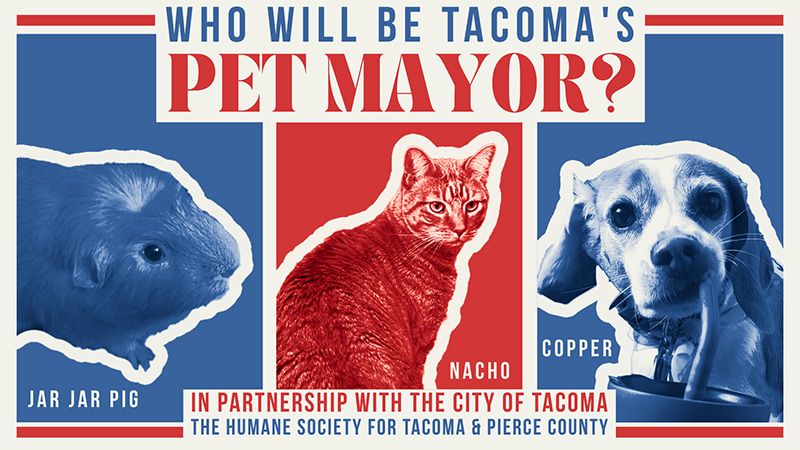
The primary included three parties: dogs, cats and “critters.” The top vote-getter in each category then moved on to the general election. A total of 48 pets entered, each with a $25 submission donation and brief campaign message. Votes were $1 each and unlimited, with a $5 minimum to help cover processing fees.
City and shelter promotion leaned heavily on social media, email and word of mouth, with the Humane Society’s communications team creating eye-catching graphics with a patriotic flair to help draw attention.
On Election Day, Nacho came out on top, with rescue dog Copper and guinea pig Jar Jar Pig close behind. (Hines’ own rescue dog, Atlas, opted out of the race. The votes might be bought, Hines quips, but there’s still room for a little decorum.)
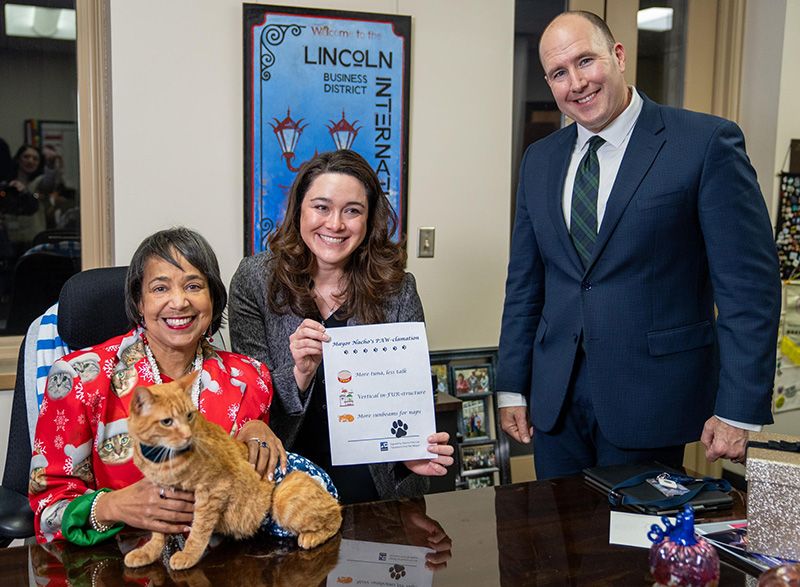
Primary winners received prize packs and tours of the Humane Society, while Mayor Nacho also earned a city “paw-clamation” and a tour of the mayor’s office during his big day.
Post-election results: Everyone’s a winner
When the polls closed, the election had raised $14,335 for the Humane Society, which will go toward low-cost spay/neuter vouchers. What’s more, it engaged more than 300 voters, including 190 new donors.
“We wanted something that would bring in new donors and give the community a chance to have fun,” Tackett says, “and it worked.”
From Hines’ perspective, the city came out a winner, too. “Government tends to be serious,” he says, “and this was a lighthearted way to get the community involved and promote low-cost spay and neuter programs.”
So what’s next? Could Nacho seek a second term? Time will tell. But Tackett and Hines are already on board for another round.
“I strongly encourage Copper and Jar Jar Pig to throw their hats back in the ring,” Hines says. “I’ve lost elections before, and it’s important to try again. Next year could be their year.”

Advertisement