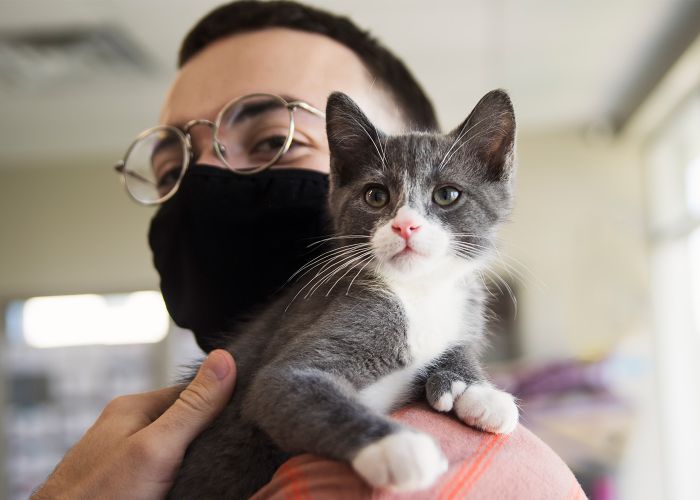
Q&A: Matt Wildman on the National Cat Behavior Helpline
Free counseling service helps people resolve cat behavior problems, keeping pets in their homes and saving time for shelters and rescues
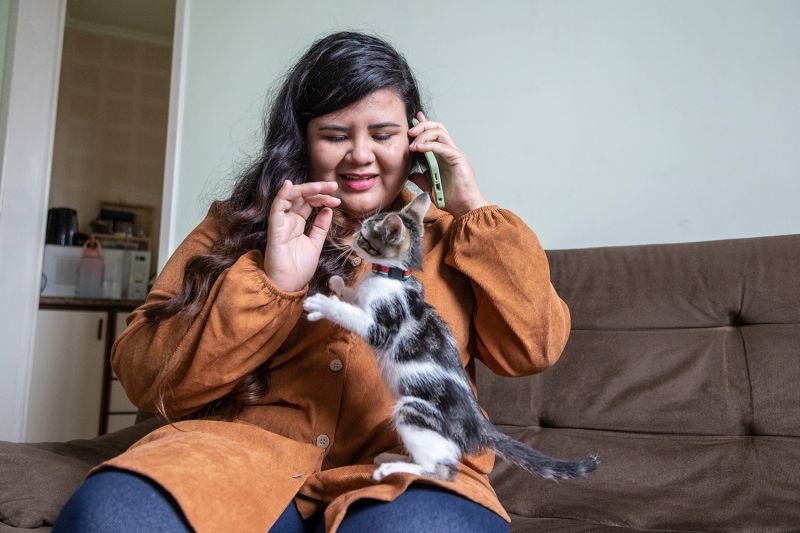
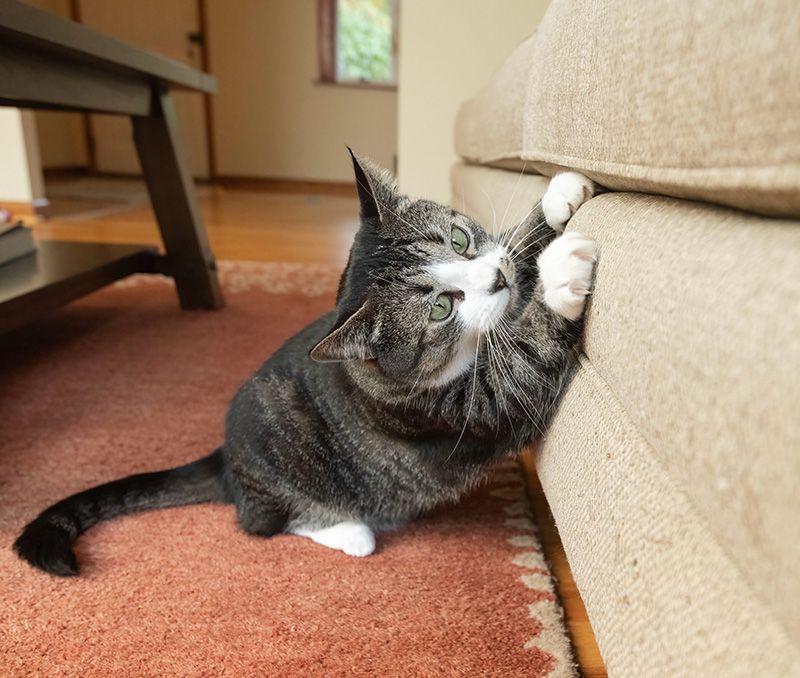
Not using the litter box. Brawling with other pets. Destroying the furniture.
These are just a few of the feline transgressions that prompt frustrated humans to contact shelters and rescues for advice.
Fortunately, most behavior issues are solvable, says Danielle Bays, senior analyst for cat protection and policy at Humane World for Animals. But not all shelters have a staff member or volunteer with the knowledge to guide people to a solution.
Even for those that do, such people typically have a pile of other pressing duties, says cat behaviorist Matt Wildman. They often lack the time for the long conversations and follow-up calls that can be necessary to identify potential causes for a cat’s misbehavior.
This reality was on Wildman’s mind when he first envisioned a helpline that would provide free counseling to owners, adopters and foster caregivers struggling with cat behavior challenges.
To find out if the idea was feasible, he emailed a group of people he’d met years earlier while teaching a cat behavior course and asked if they’d be interested in volunteering for a helpline. Within a few hours, dozens of enthusiastic responses arrived in his inbox.
“That convinced me that I was on the right path,” he says.
The National Cat Behavior Helpline launched in March with Wildman and five other volunteers (plus 10 volunteers in training) all working toward the same goals: to help cats and people live in harmony, keep more cats in their homes, and alleviate pressures on shelters and rescues.
In this edited interview with HumanePro, Wildman describes his path to feline advocacy and what he hopes to achieve with the helpline.
How did you first become interested in cat behavior?
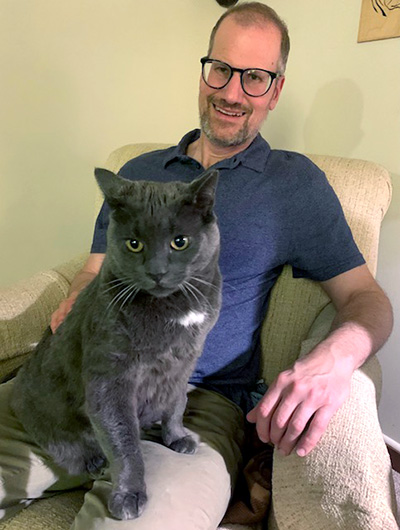
After eight years as a history teacher in a Brooklyn public high school, I took a job as a volunteer coordinator and humane educator at a high-intake shelter in New York City. I didn’t know anything about cats at that time. My mom was a dog rescuer, so I grew up with a lot of dogs but had never had a cat.
Three years later, I left the shelter and began to volunteer with an organization that provided resources to people to help keep pets in their homes. We had an amazing certified cat behaviorist named Beth Adelman. She gave me every book I could read on cat behavior, and she guided me through dozens and dozens of cases. After several years, I was very confident handling these cases.
That’s how things came full circle for me in terms of still being able to use my teaching skills. I’m still educating, which has been a real joy for me. And, as much as I love history, cats are far more meaningful to me.
You recently updated Humane World’s online course on cat behavior counseling. What inspired you to go further with this new helpline?
We first launched the Cat Behavior Counseling Course in 2013. The goal was for shelters and rescues to take this information and to assist their adopters, their fosters and people contemplating surrendering their cat for behavior reasons. It was a real big success.
Then, about a year and a half ago, I was asked to help update the training, and it occurred to me that there’s still the issue of time at shelters. Maintaining communication with clients who are seeking help is really key, and at many organizations, especially at underfunded shelters, there’s just not the time to take on these cases.
What’s the process for people who want to volunteer for the helpline?
We start by asking people to complete the online Cat Behavior Counseling Course, which is a free, self-paced course. There are two major texts in it, and by the time you complete it, you have a lot of knowledge and hopefully a lot of confidence and communication skills necessary for cat behavior counseling.
After they take this course, I provide them with about 15 case scenarios. And then I meet one-on-one with them to review them. This is to make sure that the volunteers are comfortable handling cases. And we go over our standard intake forms, our process for keeping track of everything and the expectations for the role.
It’s our goal to create a community and an impactful, meaningful volunteer experience where people are developing some wonderful communication skills and also acquiring a great deal of knowledge. Once or twice a month, we’ll have Zoom meetings to just have people connect with each other, share cases, build on our knowledge base and hopefully develop some friendships among people who are like-minded in their devotion to cats.
What are some of the most common behavior issues you handle?
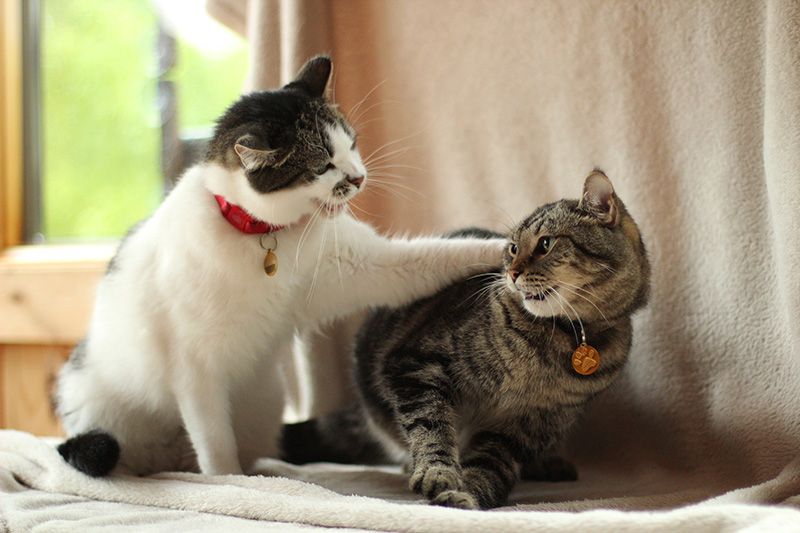
Litter box issues, inter-cat issues or issues with other pets in the home, and a lot of just understimulated cats, whether that leads to play aggression, destruction in the home or keeping their person up at night. Those are probably the big three, but we get a wide range of cases.
One shelter recently referred a woman who had adopted a cat three days earlier and had not seen the cat, who was hiding in a recliner. One of our helpline volunteers provided her with wonderful advice to ensure that, No. 1, the cat is eating and drinking and eliminating. The cat’s been making progress, and the woman’s very grateful because she was so worried.
What are your most challenging cases?
Most cat behavior cases are resolvable as long as the owner is amenable to advice and has some time and motivation to work through the issues. But sometimes either the owner is not as committed, or the cat’s behavior is just too much for them to handle.
I have a case that I’m going to be calling later today where a woman is six or seven months pregnant. She has a cat who’s fractious in general, and she very much wants to keep the cat, but she’s concerned with a new baby arriving.
Our primary concern is the safety of people and pets in the home. We’re very comfortable handling aggression cases, but we also know when a case needs to be referred to a local veterinary behaviorist or cat behaviorist because sometimes it’s just clear that they’re going to need an on-the-ground expert.
How can shelters and rescues refer cases to the helpline?
If there’s a person in need of assistance, the shelter or rescue can offer our services and then simply email our helpline with the person’s contact information and a brief blurb about the issue, like “cat not using the litterbox,” and we’ll follow up.
When someone asks about surrendering a cat, we encourage shelters to ask: “If the behavior issue was resolved, would you like to keep the pet?” That helps you figure out if the relationship can be repaired and then you can tell them about the helpline.
Our goal is that ultimately every shelter and rescue in the country has our information and can offer our services to fosters, adopters and members of the public who are struggling with cat behavior issues.
What kind of feedback have you received from organizations that are referring cases to the helpline?
The response from shelters has been wonderful. They are so grateful for this resource, and they see the need for it.
We recently got a referral from a shelter for a case involving a newly adopted cat who is showing agitation around the resident dog, who is old, blind and totally leaving this cat alone. But the cat, for whatever reason, views this dog as a threat and is hissing and approaching and swatting.
This is the kind of case where it would be very hard for somebody working at a shelter and has 20,000 other things to do, to ensure that they’re on top of this case, which we definitely need to be on top of because it’s tricky.
It's been a few months since you launched the helpline. How are you feeling about it?
We’re all pretty proud of this work we’re doing. It’s a wonderful feeling when you help somebody who was like, “Oh my God, I thought I had to give up my cat.” Or even if they weren’t planning to give up their cat, but the cat’s not getting the love they need because the person’s very frustrated with them. To resolve that and to maintain that connection between people and their pets is just extraordinary.

Advertisement