Social workers bring human focus to pet adoptions
Adopters Welcome training program supports adoption counselors, volunteers and adopters
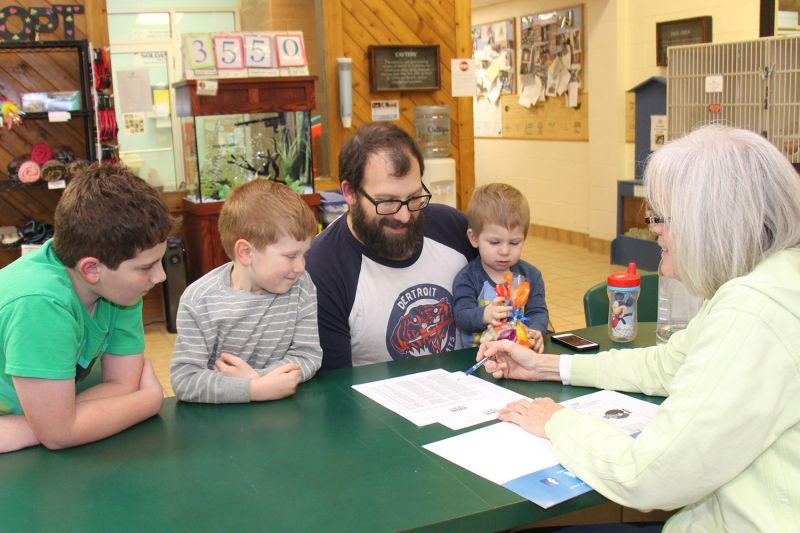
Rachael Villaseñor, a licensed clinical social worker, admits that when you first hear the words “social worker,” you might not think “animal welfare.”
But that’s exactly Villaseñor’s focus—as a veterinary social worker, she works at the intersection between helping people and helping animals. And she’s now on contract with Humane World for Animals, alongside two fellow social workers and three experts in shelter operations, conducting revamped Adopters Welcome trainings for shelters and rescues across the country.
The team’s mission: Help shelters and rescues dismantle barriers to adoptions by supporting all the humans involved in the process, including shelter staff, volunteers and community members.
“A person isn’t a silo in their environment,” Villaseñor says. “They are affected by how their community supports them, by the people around them and the animals around them. A social worker’s role is to help understand that person as a whole and how to support them.”
Each training is tailored to address a shelter or rescue’s specific needs, with one key thread woven throughout: Human relationships form the foundation for any organization’s ability to help animals in need.
“Adopters Welcome is rooted in a philosophy all about building relationships with potential adopters,” says Lindsay Hamrick, director of shelter outreach and engagement at Humane World. “Of course, matchmaking includes understanding the animals and their needs, but adoptions are all about talking with humans.”
“A person isn’t a silo in their environment. They are affected by how their community supports them, by the people around them and the animals around them. A social worker’s role is to help understand that person as a whole and how to support them.”
—Rachael Villaseñor, veterinary social worker
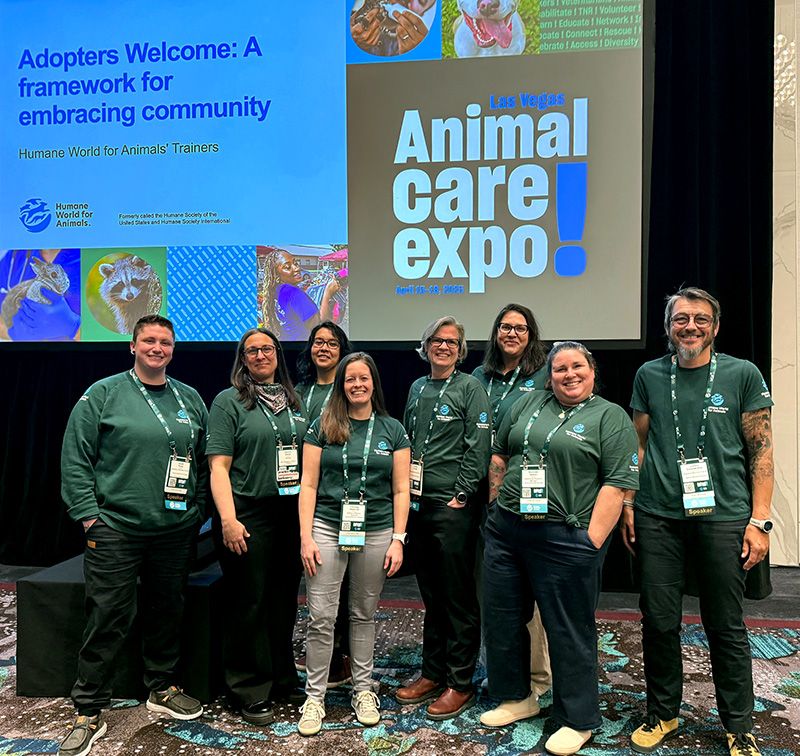
Removing barriers to increase pet adoptions
The updated training program is rolling out as shelters and rescues face increasing capacity challenges. “Adoptions have been down the last few years, and every year adoptions drop, more animals stay in the system,” Hamrick says.
To reduce the backlog and get animals into homes faster, Adopters Welcome trainings help staff identify barriers to adoptions and ease the overall adoption process.
This means rethinking the multipage applications, landlord checks, veterinary references, fenced-yard mandates and other rigid requirements that block many families from adopting while doing little to ensure animals will land in loving homes. “Sometimes, fears of what could happen to pets influence adoption policies far more than what actually happens,” Hamrick says.
But it takes a mindset shift for shelter and rescue workers to get more strategic and intentional about how they connect with potential adopters, says Rachel Hahn, director of animal and client services at the Milwaukee and Ozaukee campuses of the Wisconsin Humane Society. It’s one of the reasons her team enlisted the Adopters Welcome trainers for their adoption counselors and client services staff.
“With Adopters Welcome, we’re thinking about barriers we’ve been putting up for those who seek adoption services or to keep their pet with them,” Hahn says. “How do we approach adoption from a whole-person perspective and understand what our adopters need to make successful placements happen?”
Hamrick points out that when one adopter has a positive experience, it can have a ripple effect across the community.
“The way community members view shelters and rescues matters a lot,” she says. “It affects how people perceive adoption as a way to acquire their next pet and whether they feel comfortable reaching out to their local shelter for help, which can keep more pets with their families.”
Building trust and emotional resilience
Just as community members need support and understanding, so do adoption counselors.
“If an adopter takes a dog home, and the dog doesn’t get along with their other dog and they have to return the adopted dog, it’s not a failure. It’s a learning experience. But if you’ve been trying to place that dog for three months, you feel disappointment,” Hamrick says. “Situations like that can be stressful or traumatic. When shelters don’t process those situations in a team-built space, people carry those experiences alone, and then they try to prevent it from happening again. So we maybe throw a new question on the adoption application.”
Through an increased focus on training and supporting team members, the Adopters Welcome trainings delve into how organizations can better support their staff and volunteers, improve team culture, and address the anxiety and stress that many adoption counselors experience.
“We hear over and over again that shelters want to increase adoptions, but if you don’t support the people doing that work, they’re going to feel stressed and feel solely responsible for the lifelong success of the match they’re making between an adopter and a new pet,” Hamrick says. “We need to build resilience.”
The social workers are key to this part of the program. They bring professional expertise on burnout and compassion fatigue. And they ask questions related to psychological safety, such as “do we feel able to admit a mistake, can we speak up, do we feel respected and part of a team,” says Jordan Constantine, a social worker and Adopters Welcome trainer.
In another role, Constantine researched those team dynamics within child welfare jurisdictions.
“We know from child welfare that teams that organize better together around their work and have stronger connections together experience less emotional exhaustion,” Constantine says. “How we come together as a team affects how we experience the work, and then we can take those relationships when we go into the community.”
This takes shape within the trainings as skill-building exercises in which shelter staff practice an open-conversation approach to adoptions. One team member takes the role of the adoption counselor, and another plays the potential adopter.
“Sometimes it is just about changing the questions we ask, how we’re showing up, how we’re listening and who we’re listening to,” Constantine says.
Villaseñor says the most gratifying part of a recent training was at the end, when two staff members who had been quiet throughout the training came up to her and thanked her for being there.
“There is a high level of stress in this field, and you could tell they felt burned out and frustrated,” she says. “They said they really needed this to make shifts and move forward together.”
Challenging internal biases, addressing fears
Villaseñor and Constantine both have animal welfare backgrounds on top of their social work degrees. Constantine managed a high-volume spay/neuter clinic, Villaseñor led adoptions for a Chicago rescue, and they both worked as Pets for Life coordinators. These experiences help them understand where staff and volunteers may struggle with taking a more trusting approach to adoptions.
“A lot of times in their mind they believe they are protecting the animal,” Villaseñor says, referring to an adoption counselor’s gut instinct to reject a potential adopter—a sometimes biased reaction that the trainings caution against. “There’s a fear that if they say yes, something could go wrong, and then they’ve made a mistake. It’s moral distress.”
Hamrick also gets why some staff or volunteers may greet the Adopters Welcome philosophy with skepticism. “When I worked as an adoption counselor back in 2006,” she says, “the way I was taught was we had an application, people had to answer the questions the right way, and if they didn’t, we believed it meant the animal wouldn’t have as good an outcome as they could have had.”
“When I look back on those years,” she adds, “I was 24 years old and thinking someone with more than two decades experience owning pets wasn’t ready for this animal; it was absurd.”
Constantine, who uses the pronoun they, empathizes with shelter and rescue staff who may be hesitant about Adopters Welcome. When they first learned the program supports spaying or neutering for pets at home without requiring it, they thought back to their work at spay/neuter clinics and “couldn’t get my head around it.”
“Then I realized if there are no other intact animals in that home, should that be a barrier? But I had to rethink that,” Constantine says.
Everyone in the sheltering field has innate biases about their work that ought to be challenged, they add, “and it takes other people and conversations to do that.”
A question that Villaseñor helped staff discuss and rethink at a recent training: What if someone returns a pet, and then comes back later to adopt again?
First, she says, “we want to know why they returned the animal. Was there something we could have done to support them to prevent the return?”
If not, if it just wasn’t a good fit, then she suggests reframing the negative thought. Instead of feeling anger and disappointment about the return, think about how the animal got a break from the shelter—basically a short-term foster placement.
“Research shows getting out of the shelter even for brief periods decreases [animals’] stress levels and helps them long term with stress in the shelter environment,” she says. “That person paid you to foster. Let’s find out why they returned and find out what we can do to have a better match next time.”
The onus doesn’t just rest on adoption counselors, though, to shift their mindsets. Constantine says leadership is a crucial piece of the puzzle in helping staff embrace the Adopters Welcome program. “To trust the community enough, to be open to having less barriers to adoptions … leadership is key to that. You need to have a leader that you know is going to support you.”
Adopters Welcome ripple effects
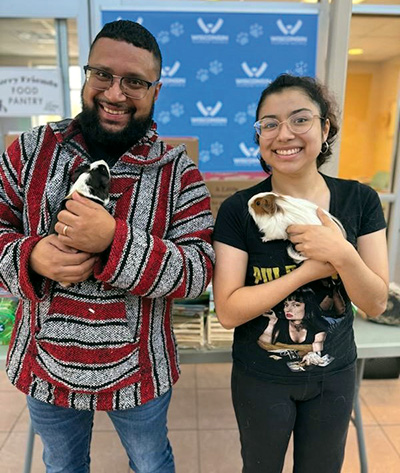
At heart, Adopters Welcome is a community-centered philosophy, Hamrick says, and one that can translate into all aspects of animal sheltering, including pet-retention programs.
As part of the trainings, the social workers help shelters understand how to connect community members with practical support resources—either directly through the shelter or through referrals to community organizations.
After co-leading the training with the Wisconsin Humane Society, Constantine shadowed their adoption counselors and watched how they helped a community member in need. A woman came into the shelter with her two small children and told staff she might need to surrender their family dog. The staff was able to give her a dog crate, free of charge. The crate was all she needed, it turned out, to keep the dog.
“There is so much vulnerability in this work, for someone to feel able to walk through the door and admit they need help,” Constantine says. “It takes a lot. It says something about an organization when people feel able to come in and do that. There’s something they’re doing with the community that’s working.”
Villaseñor says one of her favorite exercises within the training is a SWOT exercise, where teams discuss their organization’s strengths, weaknesses, opportunities and threats. This assessment can help staff and volunteers consider new ways to support adopters.
“For example, if they have a medical clinic but they have it only based on income, an opportunity might be to remove income barriers,” she says. “What stands in the way?”
“There is so much vulnerability in this work, for someone to feel able to walk through the door and admit they need help. It takes a lot. It says something about an organization when people feel able to come in and do that.”
—Jordan Constantine, social worker and Adopters Welcome trainer
Removing one adoption barrier at a time
Hahn says the training for Wisconsin Humane staff “opened up a lot of great discussions” among her teams about ways to strengthen their current approach and try new ways of working too.
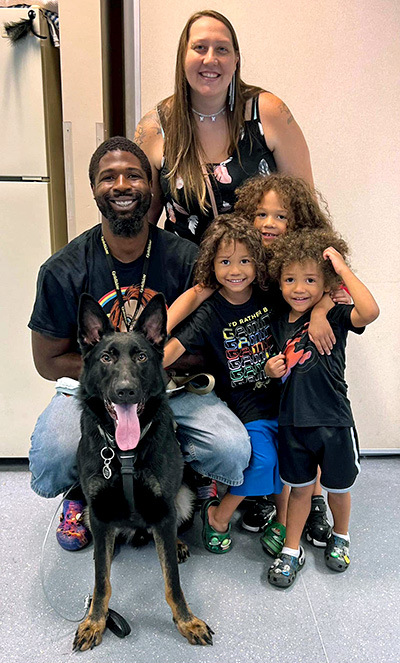
A few of the shifts they’re considering? For one, improving client engagement during wait times—keeping communication open and using waiting periods as a time to offer resources and information. Another is to deploy a client experience survey across all their locations.
And they want to “really document what we expect of a counselor and their approach and to replicate that in training sessions, and to make training objectives clear,” Hahn says. “What do we want a [potential adopter] to feel coming out of sessions?”
Constantine says it can be helpful after a training for a team to start with just one change.
“Start really small,” they say. “That’s the important thing about implementation. We’re not necessarily changing everything overnight. We might make one change. We might just stop doing landlord checks.”
Constantine recommends any shelter or rescue going through the program feel comfortable with “starting with where they are and what that first step is for them.”
More on the horizon
This year was just the beginning for the updated Adopters Welcome trainings. Hamrick and her team are currently working with the Institute for Human-Animal Connection at the University of Denver’s school of social work to study the effectiveness of the Adopters Welcome approach for shelters and community members. The results will help shape future trainings.
“I’m excited to see the program grow,” Villaseñor says. “I’m excited that social workers are a part of this process. … Seeing the animal welfare field acknowledging the need and seeing the growth for social work within animal welfare has been very exciting to see and be a part of. Social workers are definitely needed in this field.”

Advertisement