Fact sheet: Cat declawing
Educate pet owners on why it's a bad idea for their cats
Published April 11, 2025
This fact sheet is also available in Spanish.
Scratching is a natural behavior for cats. It removes the dead husks from their claws, marks territory (both visually and with scent glands in their paws) and stretches their muscles. Unfortunately, scratching is often considered misbehavior by a cat’s human guardian, especially when furniture or other household objects are damaged.
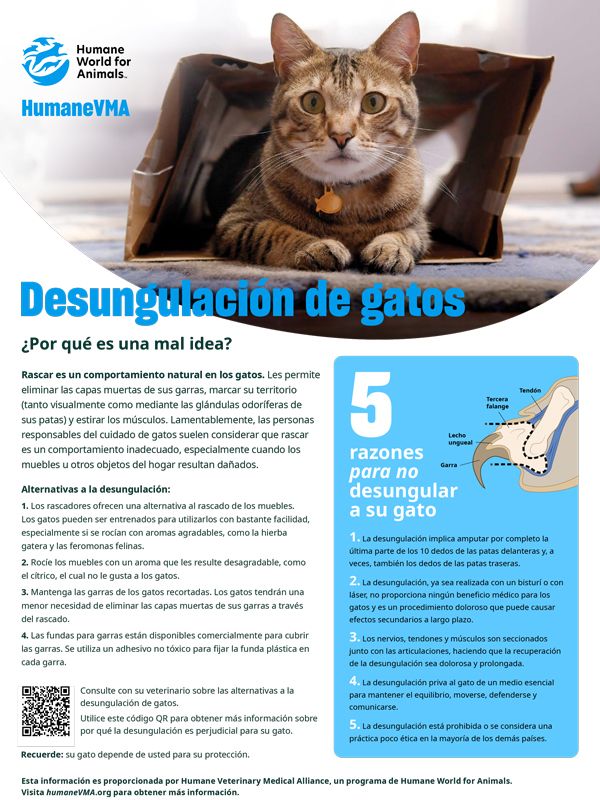
Five reasons not to declaw your cat
- Declawing involves amputating the entire last part of the 10 front toes and sometimes the rear toes, too.
- Declawing, whether performed using a scalpel or laser, provides no medical benefits to cats and is a painful procedure with potential long-term side effects.
- Nerves, tendons and muscles are severed along with the joints, making recovery from declawing painful and lengthy.
- Declawing robs a cat of an integral means of balance, movement, defense and communication.
- Declawing is banned or considered unethical in most other countries.
Alternatives to declawing
- Scratching posts offer an alternative to scratching on furniture. Cats can be trained to use these fairly easily, especially if sprayed with attractive scents, such as catnip and feline pheromones.
- Spray furniture with an aversive scent, such as citrus, which cats don’t like.
- Keep your cat’s nails trimmed. Cats will have less desire to remove the dead husks of claws through scratching.
- Nail caps are available commercially to cover the claws. A nontoxic adhesive is used to attach a plastic cap over each claw.
Speak with your veterinarian about alternatives to cat declawing. Remember: Your cat depends on you for protection.
Documents


Advertisement