Can animal shelters lobby? Yes, and here’s how
You see the real-life impacts of every policy decision affecting companion animals; learn how you can turn that knowledge into legislative power
Published June 18, 2026
When Ohio Gov. Mike DeWine signed a veterinary telehealth bill into law in June 2025, it was a win several years in the making.
The new law, slipped into the state’s operating budget as H.B. 96, made Ohio the eighth state in the U.S. to allow veterinarians to establish a client-patient relationship via live video and prescribe certain medications remotely.
This makes veterinary care more accessible for pet owners, shelters and rescue groups while also easing capacity challenges for nonprofit clinics and private practices. And it most likely wouldn’t have happened without the lobbying efforts of shelters in the state.
Yep, you read that right: lobbying.
The Ohio Animal Welfare Federation, including the Cleveland Animal Protective League, and other humane organizations showed up strategically and persistently in the rooms where legislative decisions were being made. And that, a growing number of animal welfare experts argue, is exactly what shelters across the country need to do.
“Our lawmakers are well-intentioned, but they’re not going to understand the complexity of what goes on inside the walls of these buildings,” says Sharon Harvey, president and CEO of the Cleveland APL, a nonprofit shelter that takes in more than 6,000 animals a year.
Harvey has led the shelter’s advocacy work for more than a decade. “If you put your heads in the sand and don’t get engaged,” she says, “then you really don’t have a leg to stand on if a law gets passed that you don’t particularly like.”
Shelters know things no one else knows
Animal shelters sit at the intersection of nearly every policy affecting companion animals. They see what happens when pet fees and breed/size restrictions in rental housing push families to surrender pets they love. They see what happens when veterinary care is too expensive or too far away. They track, in real time through their own intake data, what brings animals through their doors.
That knowledge is legislative power.
Since Ohio shelters got serious about advocacy, the state has strengthened the regulation of commercial breeders, abolished the use of gas chambers for euthanasia, expanded the cost of care provision to include horses and farm animals, mandated cross-reporting of animal abuse alongside child abuse, and increased penalties for certain types of animal cruelty. Thanks to these wins and others, the state’s place in the Animal Legal Defense Fund’s national animal welfare law rankings climbed from 45th in 2012 to 21st—a 24-spot jump in just over a decade.
“Shelters can help us identify emerging problems before we have a crisis,” says Jessica Simpson, program manager of public and corporate policy for companion animals at Humane World for Animals. “They can provide in-depth data and analyze information before an issue gets out of hand and hits the news. They have those stories from the community that they serve, and they’re a trusted source.”
In DuPage County, Illinois, that data recently made a compelling case: Of the 779 pets surrendered by their owners to the county shelter in the first nine months of 2025, 508 (65%) were given up because their owner couldn’t afford to keep them.
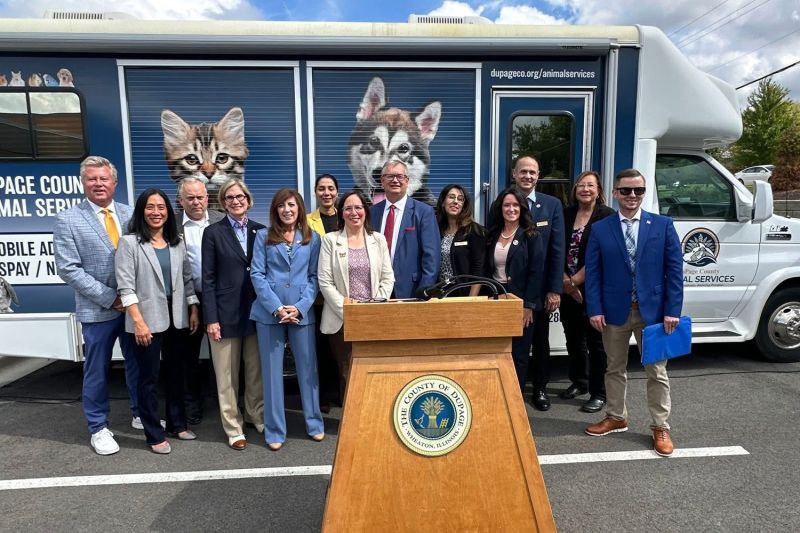
Shelter leaders, alongside Humane World’s Illinois state director Marc Ayers, shared those numbers at a September 2025 press conference announcing new legislation.
“People can no longer afford their pets,” the Chicago Tribune quoted Ayers as saying to the crowd, which included Republican and Democratic state legislators, gathered outside DuPage County’s newly built animal services facility. “There are so many reasons, mainly economic, that are creating the situation that people can no longer have a pet in their home.”
Shelters are no longer just intake and adoption facilities. Many now operate pet food pantries, low-cost spay/neuter clinics or programs that offer affordable veterinary services to the community they serve. Some provide housing navigation services and short-term boarding programs for pets of people in crisis.
That expanded role makes them even more persuasive in policy conversations, showing that they’re not just identifying problems, they’re creating solutions.
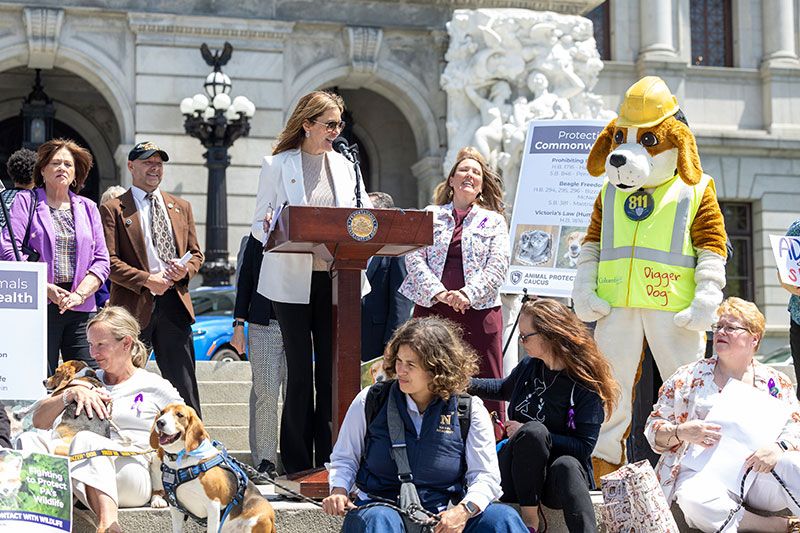
Yes, shelters can lobby
Let’s get this out of the way: 501(c)(3) nonprofits can lobby. (See “How animal shelters can get involved in lobbying” for specifics along with tips for municipal shelters and agencies.)
“Shelters and rescues absolutely need to be involved in policy formation and lobbying,” Ayers says. “I have been met with so much feedback from animal shelters that say, ‘I want to come and talk to my elected officials, but we can’t lobby.’ And I tell them, you can always talk to your elected official. That’s what they are there for.”
The real danger, he argues, is not talking to your representatives about the issues because “the opposition is doing that every day.”
Industry groups (including those representing commercial breeders) have professional lobbyists in statehouses working to influence legislation that directly affects shelters and the animals they care for. Every nonprofit that stays on the sidelines, Ayers says, leaves the field a bit more tilted.
Mark Finneran, Ohio state director for Humane World, agrees. “While animal shelters do a great job of sharing information with their communities about the issues impacting them and forming long-term relationships with their supporters, their communications and relationship-building don’t always extend to elected officials,” Finneran says. “In truth, that’s all lobbying is.”
“Shelters and rescues absolutely need to be involved in policy formation and lobbying. I have been met with so much feedback from animal shelters that say, ‘I want to come and talk to my elected officials, but we can’t lobby.’ And I tell them, you can always talk to your elected official. That’s what they are there for.”
—Marc Ayers, Illinois state director, Humane World for Animals
An investment that pays
The Cleveland APL’s path to joining the telehealth victory started long before the bill was introduced. In 2015, a piece of legislation threatened to weaken Ohio humane societies’ authority to enforce the state’s animal protection laws, and the APL was caught off-guard. The organization didn’t have the statehouse relationships it needed, and it didn’t yet have the lobbying expertise to respond effectively.
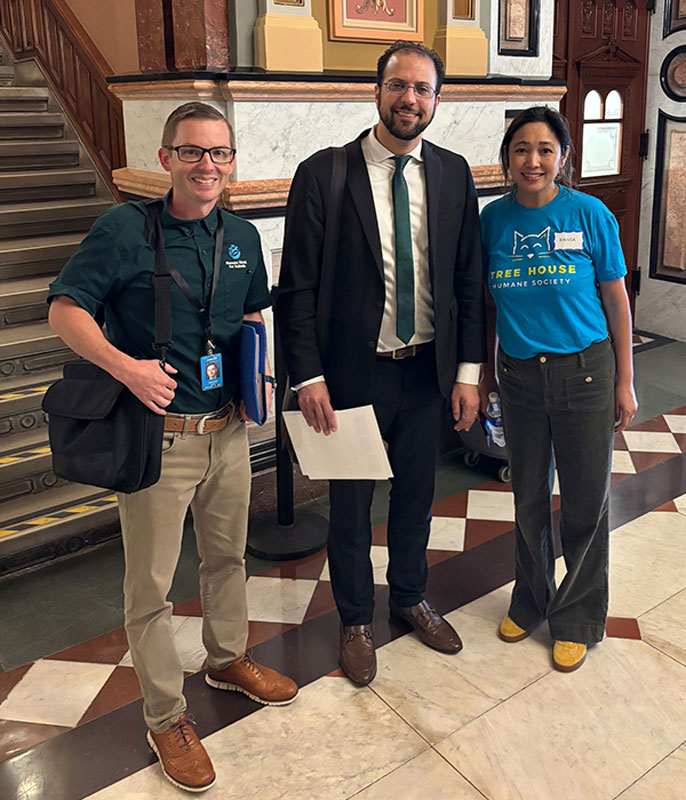
So, it (somewhat reluctantly) hired a professional lobbyist with the skills, relationships and institutional knowledge the APL lacked.
“I admit I thought I had better ways to use that money,” Harvey says. “But I have come to terms with the fact that was very shortsighted.”
The lobbyist, a passionate animal advocate and foster volunteer, started by tracking that one threatening bill. Today, he monitors about a dozen bills every legislative session for the APL, on topics such as puppy mill regulations, cat declawing and spay/neuter tax credits.
It took about six years and several legislative sessions to resolve that original bill on the enforcement of cruelty laws. The APL didn’t get everything it wanted, but it came away with multiple wins and a relationship with the statehouse it never had before.
That relationship paved the way to other wins, including the veterinary telehealth law, which took effect Sept. 30. The APL is now planning to pilot telehealth appointments through its community pet care clinic, a move Harvey says will make services more accessible and free up in-person slots for animals who need hands-on care.
Rolling with the punches
Not every policy effort will succeed the first go-round: Harvey encourages shelters to take a long-range view and not get discouraged by setbacks.
In 2023, she and her team collaborated with Humane World on a bill that would offer landlords a voluntary tax credit in exchange for removing pet breed and size restrictions, nonrefundable pet deposits and monthly pet rent fees. The goal was to help financially vulnerable renters keep their pets at home and out of shelters.
The Pet Friendly Rental Act had bipartisan sponsors and passed the House Ways and Means Committee in June 2024. Then Ohio’s tax revenue projections came in short, and the legislature lost its appetite for new credits, bringing the bill’s momentum to a screeching halt.
But the policy effort was still useful, Harvey says. The bill put the pet-housing crisis in front of lawmakers who might not have considered it otherwise. And when the APL came back the following session with the telehealth bill, it came back as an organization that legislators already knew: one that had demonstrated it could bring a serious, well-researched proposal and work through the process professionally.
“It’s worth trying, even if you end up failing,” Harvey says. “I don’t think it’s a failure to get something out there in front of lawmakers and get them to realize it’s a real issue.”
Powerful connections
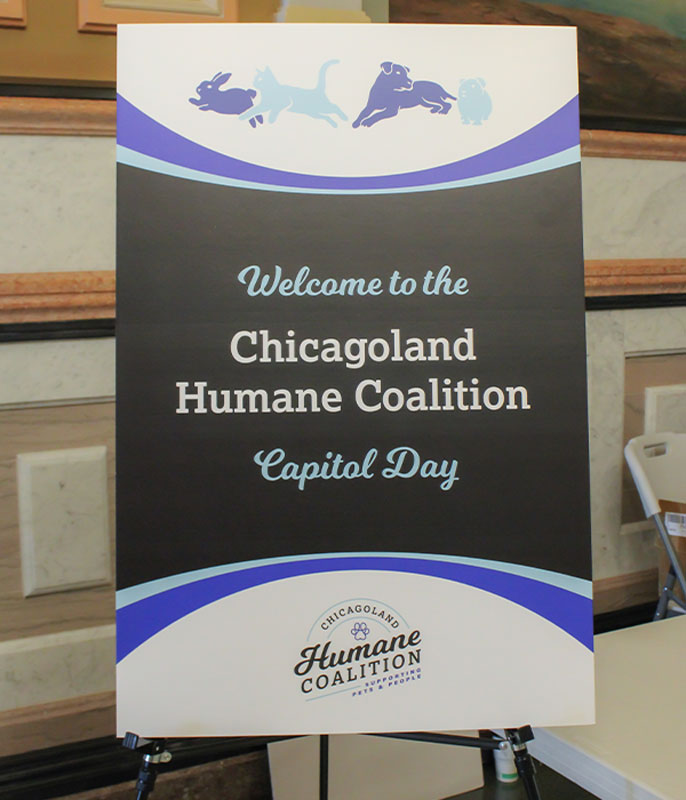
Ayers came to animal welfare from state government, where he served as a policy director for environmental and rural affairs in the Illinois lieutenant governor’s office. As Humane World’s Illinois state director for the past 11 years, he looks for ways to connect overburdened shelters with the policy levers that could help. Last fall, he organized the press conference to highlight nationwide data trends and specific bills headed to the statehouse.
The location and timing of the event were quite intentional. He chose outside DuPage County’s new animal services building with adoptable dogs to greet attendees, and he scheduled the event in September, between legislative sessions, when lawmakers were back home in their districts.
Republicans and Democrats stood at the same podium and talked about letting veterinary technicians administer rabies vaccines (H.B. 5411, which passed both chambers and was sent to the governor in mid-June), capping pet fees and deposits in rental housing (H.B. 5183, which ultimately failed to get a hearing) and more. Shelters that attended started calling their legislators the following week.
The press conference generated momentum for the bills and also helped Ayers and his allies to identify any opposition.
“There’s a misconception that good animal policy will just pass,” he says. “It never happens that way, because every good animal bill has loads of opposition.”
Shelters and rescues are crucial to countering the naysayers and swaying elected officials, Ayers adds. “They have so much power, and I think that is so often overlooked with shelters and even just fosters or volunteers or donors.”
Helping them flex that power is a big part of Ayers’ job. “By just plugging shelters into the legislative process,” he says, “it will change things for the better in a fairly quick way.”

Advertisement