
Blog: Where human housing and animal welfare intersect
Shelters and other animal protection organizations join the fight for fair housing
Published December 23, 2025
When people ask me what the affordable housing crisis has to do with animal protection, I tell them about pets like Nero.
A 9-year-old, eight-pound Chihuahua mix, Nero was surrendered to the Fairfax County, Virginia, animal shelter last fall when his family moved into government-subsidized housing that prohibited pets. A true “Velcro dog,” he became highly stressed in the shelter. A staff member had to take him home until he was emotionally stable enough for adoption.
Unfortunately, situations like this are all too common. This year, we’ve seen numerous reports from across the country about the lack of affordable housing and its impact on people and their pets.
Their stories illustrate how housing barriers translate into real harm for families—while also placing an enormous strain on our shelter systems.
Mapping pet relinquishments

Most so-called “pet-friendly” rentals come with a host of restrictions: limits on how many pets are allowed, what type, what size, and almost always a fee.
Some costs, such as refundable deposits, may be appropriate to help landlords protect their investment, but in today’s market, pets are too often treated as revenue generators. Families who can’t afford the fees, or who can only access housing that won’t allow their pet, are often forced to choose between keeping a roof over their heads or keeping a member of their family.
To better understand and address these barriers, Humane World for Animals partnered with seven animal shelters, and since 2022, we’ve surveyed more than 4,800 pet owners across 27 states to collect in-depth information on how housing policies affect people and their pets.
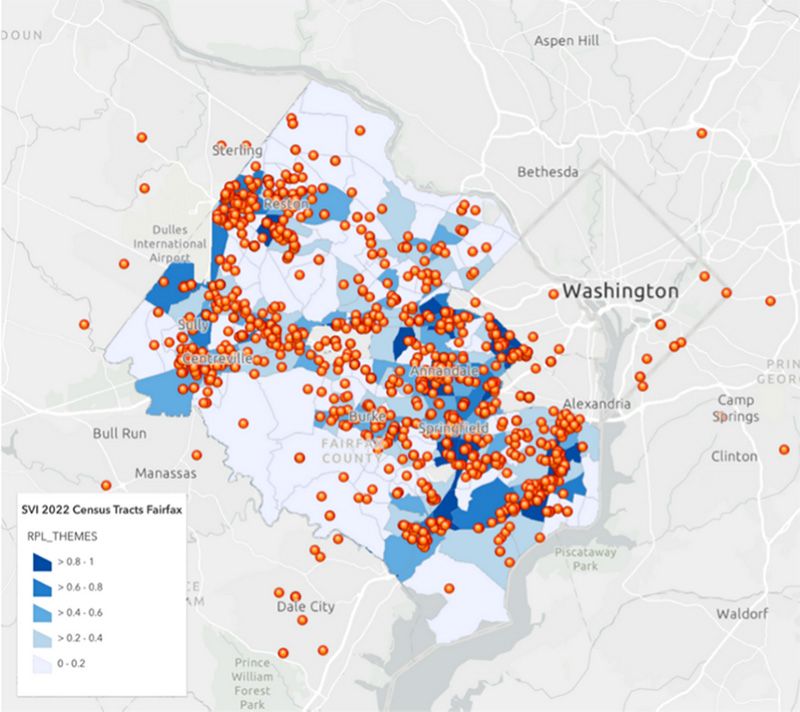
Consistently, most housing-related pet relinquishments occur in densely populated areas with the highest renter populations. These are areas that also rank highest on the Social Vulnerability Index, a metric developed by the U.S. Centers for Disease Control and Prevention to measure communities at risk during crises. (The SVI also serves as a diagnostic tool for structural inequity, helping governments see where vulnerability is rooted in history, not just circumstance.)
When we map pet relinquishments related to housing and financial hardship against the SVI, the inequities become apparent. Communities with higher SVI scores—those facing greater socioeconomic challenges, limited access to resources and higher housing instability—consistently show disproportionately higher rates of pet surrenders tied to housing barriers.
This reinforces what we already knew anecdotally: Housing-related pet surrenders are also tied to economic and geographic inequities. Households in high-SVI tracts are more likely to encounter rising rents, limited pet-inclusive housing options, displacement risk (the likelihood that people will be forced to move from their homes because of rising costs, development or other external factors) and stricter enforcement of pet restrictions.
What’s more, communities continue to reflect patterns of racial and economic segregation shaped by decades-old policies that concentrate poverty in certain neighborhoods and limit access to essential resources, including veterinary care and pet supplies.
In other words, pet relinquishment isn’t the result of individual choices or “irresponsible” pet owners: It reflects deeper, place-based inequities, underscoring an urgent need for more inclusive housing practices and policy reform.
How rental policies contribute to housing insecurity
Studies have found that housing insecurity ranks among the top reasons people are forced to give up a beloved pet.
Based on the shelter data we collected, restrictive rental policies are the most common housing-related reason for relinquishment. Our survey found that owners who faced pet restrictions cited the following reasons to shelters about which housing policies were driving their need to surrender:
- Limits on number of pets (45%)
- Breed restrictions (25%)
- Weight restrictions (14%)
- Other rules (15%)
Pet fees are also problematic. Most states don’t regulate pet-related rental fees, leaving it to the market to determine what landlords may charge tenants to keep a pet. While refundable deposits can be appropriate to protect properties, nonrefundable fees have become common and are often excessive.
Our survey found that 80% of respondents were charged nonrefundable fees (either as upfront costs or monthly pet rent). Only 12% were charged solely with refundable pet deposits. Nonrefundable fees add to the burden of already high housing costs, making it more difficult for renters with pets to secure and maintain stable housing.

Opportunities for progress in pet-inclusive housing
By studying the deep connection between tenant rights and animal welfare, Humane World aims to pinpoint what’s working, where gaps persist and how we can more effectively keep families (furry members included) together.
We’ve partnered with the Opportunity Starts at Home campaign, which this year released a fact sheet showing the link between companion animal welfare and access to stable, affordable, pet-inclusive housing. Collaborating with OSAH enables us to step beyond the traditional animal welfare space and work with housing advocates and cross-sector partners to address complex, interconnected challenges.
These partnerships are key as we push to dismantle housing-related barriers to pet keeping. With policymakers increasingly recognizing that pets are part of the family, we’re seeing real progress in the legislative arena.
Here are some of the issues we’re advancing in state and local legislatures:
- Limits on runaway fees: Efforts are underway to curb excessive or nonrefundable pet fees that create financial barriers for renters. Colorado and Washington, D.C.—along with multiple towns and cities—have already passed laws regulating pet fees in rental housing.
- Pet-inclusive subsidized rental housing: There’s a growing interest in ensuring that government-subsidized housing welcomes pets without the restrictive policies that often contribute to housing insecurity. Public dollars intended to keep people sheltered and off the streets should support both housing stability and family stability. Colorado, Florida, Illinois and Nevada have enacted laws mandating pet-inclusive policies in publicly funded housing. California now requires nearly all state-subsidized housing to allow pets.
- Insurance reform: Many landlords blame insurance providers for breed restrictions, even while there’s no actuarial data to support such restrictions. Seven states (Arizona, Colorado, Illinois, Minnesota, Nevada, New York and Pennsylvania) now prohibit insurers from discriminating against owners based on their dog’s breed, helping ensure consistent, data-driven underwriting rather than arbitrary exclusions.
- Pet policy transparency: Requiring landlords to clearly post pet policies online and in applications promotes fair competition and informed decision-making. While this may seem like a small change, it can have big implications. Currently, renters waste time and money navigating inconsistent, opaque rules. Transparency streamlines the housing search and helps renters make informed choices.
I encourage shelters, rescues and individual animal advocates to join our fight for fair, stable and pet-inclusive housing for everyone. Together, we can help protect renters with pets and foster a wider understanding that pets aren’t possessions—they’re beloved members of the family.
Learn more: Download our Pets Are Welcome Guide to Advocacy to learn how you can help advance pet-inclusive housing policies in your community and state. Share our “Facing eviction?” fact sheet to help pet owners in your community navigate a potential loss of housing.

Advertisement
